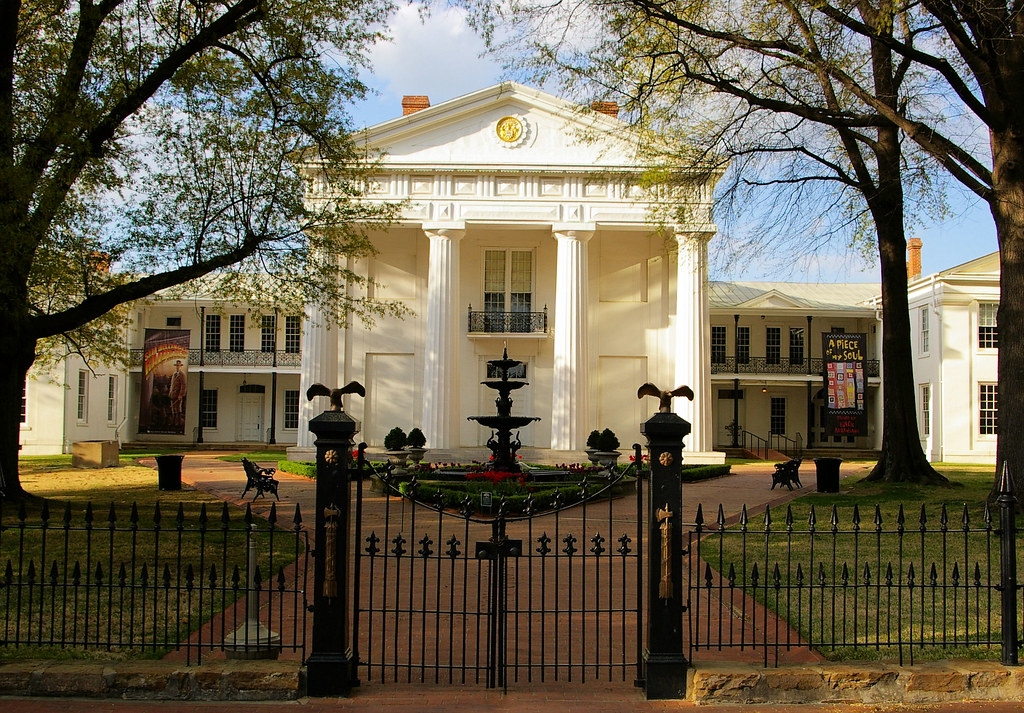
There are places that simply tell you history, and then there are places that pull you straight into it. Historic Arkansas Museum, tucked into the heart of downtown Little Rock on Scott Street, is unquestionably the latter. From the moment you step through the doors, you get the genuine sense that the past here is not behind glass so much as it is breathing right beside you.
The museum sits on one of the most historically significant footprints in the entire state. The grounds preserve original antebellum structures — actual houses, a tavern, a gunsmith shop — that date to the 1820s and 1840s, making them some of the oldest standing buildings in all of Arkansas. Walking among them feels less like a museum visit and more like stepping into a meticulously preserved neighborhood, one where the streets smell faintly of old timber and possibility.
What strikes you first is the scale of the outdoor living history area. Unlike so many museums where you peer at reconstructed facades from a rope line, here you can walk inside these structures, peer at the period furnishings, and let your imagination do the heavy lifting. The c. 1827 Hinderliter Grog Shop alone is worth the trip — it is believed to be the oldest surviving structure in Little Rock, and standing inside it, you cannot help but wonder about the territorial-era Arkansas characters who warmed themselves by that same hearth.
Inside the main museum building, the permanent galleries are thoughtfully curated and genuinely engaging. The Arkansas Made collection is a particular standout — an impressive assemblage of decorative arts, furniture, silver, quilts, and ceramics crafted by Arkansas artisans from the eighteenth century onward. It is the kind of collection that reframes how you think about creativity and craftsmanship in what is often dismissed as the frontier South. The gallery presentations are clean, well-lit, and accessible without ever talking down to you.
Rotating exhibitions keep the experience fresh for repeat visitors, and the museum regularly hosts special events, lectures, and living history demonstrations that draw enthusiastic crowds. Admission to the permanent galleries and the historic structures is free, which makes the whole experience feel almost outrageously generous given how much there is to absorb.
The museum is located at 200 East Third Street in the MacArthur Park neighborhood, just a short walk from the state capitol and the broader downtown arts district. Parking is easy to find nearby, and the surrounding blocks offer plenty of options for lunch before or after your visit.
Whether you are a lifelong Arkansan or a first-time visitor, Historic Arkansas Museum rewards curiosity with substance. Plan for at least two hours, bring comfortable shoes for the outdoor grounds, and leave room to linger. You will not regret a single minute of it.