Fair question. You’ve probably walked past the old courthouse on Main Street, registered it as vaguely impressive, and kept moving. That’s most people’s relationship with it. It sits there in that unapologetically Victorian way — all granite and arched windows — daring you to care, fully expecting you won’t.
The building in question is Worcester’s City Hall, completed in 1898, and it’s one of those civic structures that the city has somehow managed not to ruin. The exterior alone is worth stopping for: Romanesque Revival with a clock tower that actually works, which puts it ahead of several buildings I could name. The architect was Richard Howland Hunt, and the whole thing has that period confidence that suggests the people who commissioned it believed Worcester was going to be a very big deal. They weren’t entirely wrong.
Inside, the main lobby and staircase are genuinely impressive — marble floors, ornate ironwork, the kind of proportions that make modern municipal architecture look like a corrective apology. The city still uses the building for actual government functions, so you’re not walking into a museum. You’re walking into a working city hall, which is either charming or inconvenient depending on what you need.
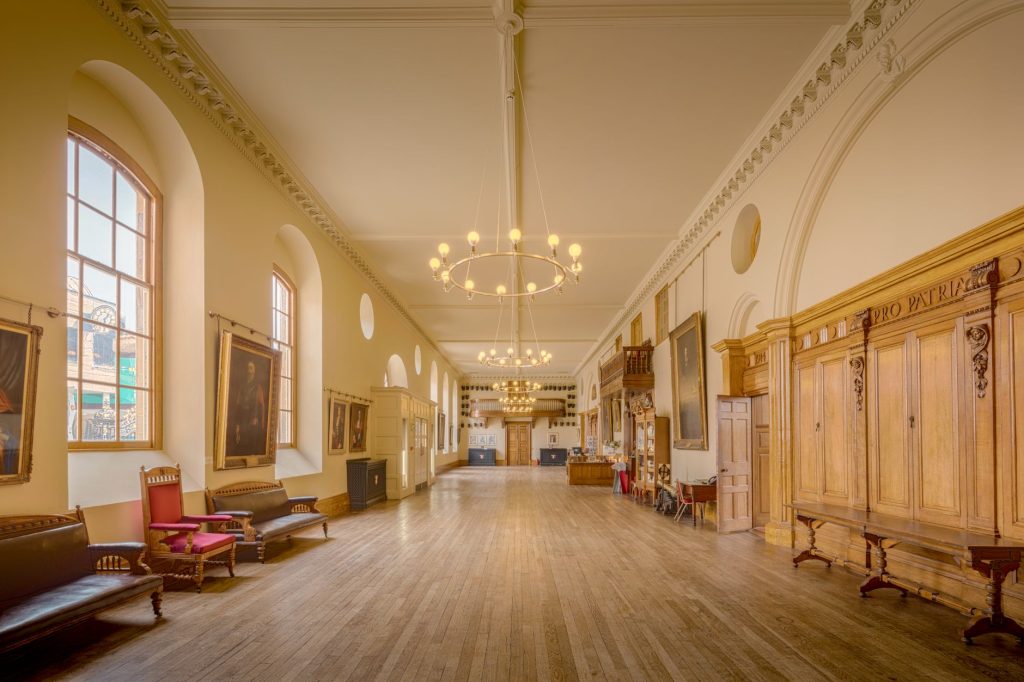
What most visitors don’t realize is that the building is freely open during business hours, Monday through Friday, roughly 8:30 to 5. No ticket, no guided tour required. You can walk in off Main Street, look around the public spaces, ride an elevator that feels like it has opinions about you, and leave. The Council Chambers are occasionally accessible and worth a look if the doors are open — high ceilings, old wood, the kind of room where bad decisions have been made with great gravity for over a century.
The surrounding district, including the Worcester Common out front, gives you the full civic composition. The Common itself has seen better landscaping days, but it anchors downtown in a way that’s hard to dismiss. There’s a fountain, a few monuments, and enough open space to understand what the city center was meant to feel like before the highway engineers had their way with it in the 1950s and ’60s.
Best time to go is a weekday morning, when the building is active but not crowded, and the light through the tall windows hits the interior stonework at a reasonable angle. Parking on Main Street can be patchy; the garages nearby on Foster Street are easier and usually cheap for a short visit.
There’s no cost, obviously. This is city property. If you’re the kind of person who enjoys civic architecture — or if you’re just tired of paying twelve dollars to look at things — this is a good use of twenty minutes. The building doesn’t perform for tourists. It just stands there doing its job, which, after 125-odd years, seems like a reasonable thing to admire.