You probably walk past it on the way to something else. That’s understandable — the Mall is loud with ambition, and the red sandstone building sitting at its center looks more like a Victorian folly than a destination. So you ask yourself: is the Smithsonian Institution Building actually worth stopping at, or is it just a scenic backdrop for photos?
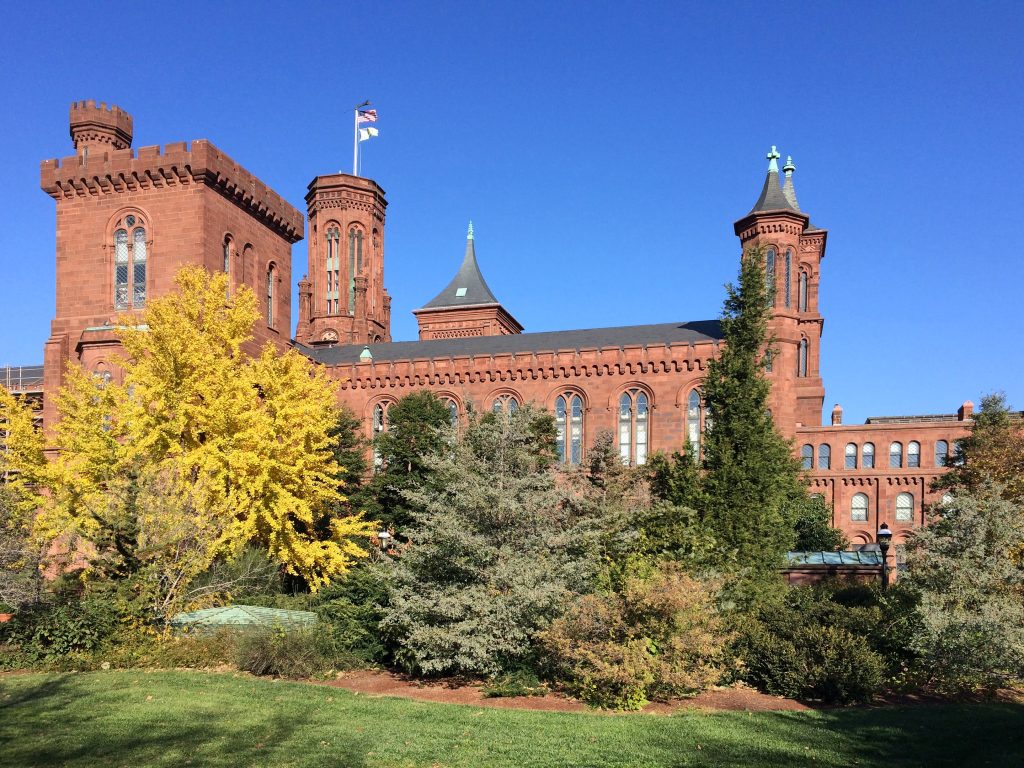
Stop. Go inside. The Castle, as everyone calls it, earns its nickname and then some.
Built in 1855 from Seneca red sandstone quarried out of Maryland, the building was the Smithsonian’s first structure and, for a while, its only one. James Renwick Jr. designed it — the same architect behind St. Patrick’s Cathedral in New York — and the result is equal parts Norman fortress and English Gothic whimsy. The building no longer houses major collections, which is precisely why most visitors pass it. That’s their mistake.
What you find inside is the Smithsonian Information Center, yes, but also something more atmospheric: a calm, high-ceilinged hall where you can actually get your bearings across the entire institution’s nineteen museums and galleries. Staff here are genuinely helpful in the old-fashioned sense, not just pointing you toward the gift shop. The scale models and overview maps of the Mall are useful in a way that no app quite replicates. And the building itself — the coffered ceilings, the stone arches, the light falling through tall windows — rewards anyone who looks up.
James Smithson is buried here, too. The British scientist who left his fortune to found the institution never visited the United States in his lifetime, which gives the small crypt near the entrance a quietly strange quality. His remains were brought from Genoa in 1904. There’s a bronze medallion on the floor. Most people walk right over it.
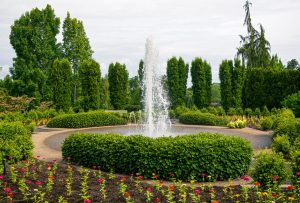
Step back outside onto Jefferson Drive and you’re immediately in the Enid A. Haupt Garden, which wraps behind the Castle between the Freer and the Sackler underground entrance. The garden is formal in structure — four-quadrant Parterre design, iron Victorian urns, a central fountain pool — but rarely crowded, even in peak tourist season. Late morning on a weekday in May or September, you might share it with a handful of people reading on the benches. The plantings change seasonally; in spring the tulip display is serious enough that gardeners photograph it for reference.
There’s no admission cost anywhere in this complex — not the Castle, not the garden. The building is open daily, generally 8:30 a.m. to 5:30 p.m., with extended summer hours. The garden stays accessible throughout daylight hours.
The experience shifts depending on when you arrive. Early morning, before the tour groups and school buses, the Castle entrance on the Mall side has an almost eerie quietness — pigeons, the sound of fountains, the faint smell of old stone. Midday it gets livelier but never unmanageable. The Haupt Garden, tucked just south of the building, rarely gets loud regardless of hour.
What the Castle offers that the larger museums can’t is proportion. After a few hours in the Air and Space Museum or Natural History — exhibits designed to overwhelm — this building gives you a place to recalibrate. The rooms are human-scaled. The crypt is strange and touching. The garden is simply pleasant in a way that doesn’t require justification.
Come here first, before the crowds settle in. Or come here last, when you need somewhere that asks nothing from you. Either way, stop walking past it.