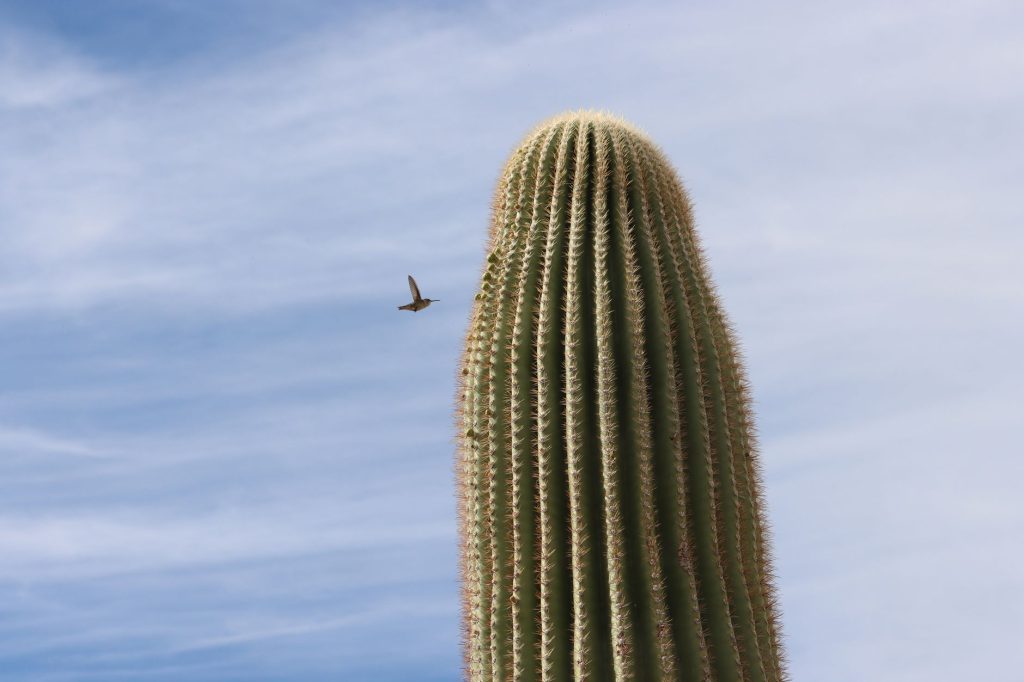
What kind of place makes grown adults sit in folding chairs for two hours without looking at their phones? The Paton Center for Hummingbirds, about an hour south of Tucson in Patagonia, is that place. It sounds niche — and it is — but once you understand what’s happening there, the appeal is hard to argue with.
The center is run by Tucson Audubon and sits on a small residential lot that belonged to Wally and Marion Paton, birders who started hanging feeders in their backyard decades ago and eventually opened the gate to strangers. That generosity turned into something real: one of the most reliably productive birding spots in the country, not because the habitat is dramatic but because the feeders draw an extraordinary concentration of species in a very small area. You can be standing four feet from a violet-crowned hummingbird, which is not a thing you say about most mornings.
There’s no admission charge. You walk in through a wooden gate off Harshaw Road, find a chair or a spot along the fence near the feeders, and wait. The grounds are simple — a covered ramada, some native plantings, a few benches — but the activity around the feeders can be chaotic in the best sense. On a good morning in late spring or early summer, you might count eight or nine hummingbird species without moving: broad-billed, black-chinned, broad-tailed, rufous, Anna’s, and occasionally rarities like the berylline or plain-capped starthroat that make serious birders drive hours in from Phoenix. Beyond hummingbirds, the riparian corridor behind the property pulls in warblers, tanagers, and flycatchers depending on the season.
The best time to go is April through September, when diversity peaks. Arrive early — before 9 a.m. if you can — before the heat settles in and before the feeders get crowded with visitors. Weekday mornings are quieter than weekends, and quieter generally translates to more birds perching openly rather than zipping in and out. Bring binoculars if you have them, though even without them you’ll be close enough to see color and wing pattern clearly. There’s usually a volunteer or two on-site who can help you identify what you’re seeing; they tend to be knowledgeable and low-key rather than performatively enthusiastic.
Patagonia itself is worth building a half-day around. The town is small and unhurried, with a handful of places to eat and the Patagonia Lake State Park a short drive away. The drive down from Tucson on AZ-83 through Sonoita is open grassland country, genuinely beautiful if you haven’t done it before. Budget maybe two to three hours total at the Paton Center if you’re inclined to linger; some people stay much longer.
Cost is zero. Parking is along the street. The Tucson Audubon website lists recent sightings and occasional volunteer-led visits if you’d prefer a more structured introduction. But honestly, you don’t need a guide. You need a chair, some patience, and the willingness to look carefully at something very small moving very fast.