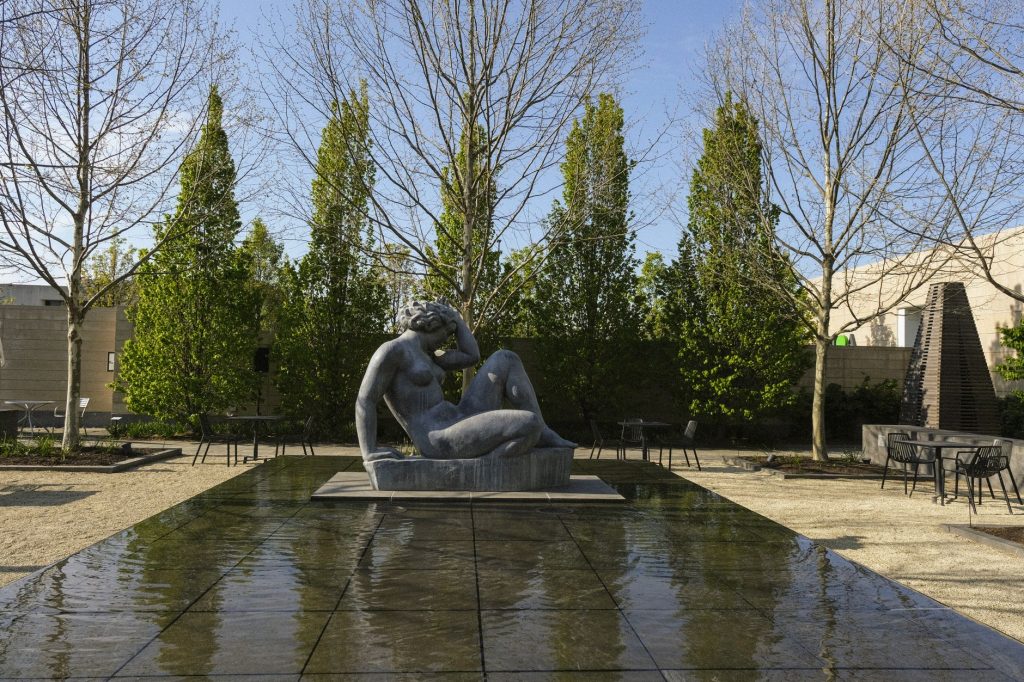
What do you actually do at Philbrook for more than an hour? That’s the question I had the first time a friend dragged me out to South Tulsa on a grey November Saturday. I expected a quick lap through the galleries, a glance at the Italianate villa, and then lunch somewhere. I did not expect to spend forty-five minutes just in the garden, standing in front of a reflecting pool with nobody else around, listening to wind move through the old-growth trees at the property’s edge.
Philbrook sits on 72nd Street in Midtown, technically, though it feels like its own world once you turn off the street and follow the long driveway toward the 1927 mansion. Waite Phillips built it as a private home — he was an oil man, like so many of the people who shaped this city — and donated the whole property to Tulsa in 1938. That backstory matters less than what it produced: a museum that doesn’t feel like a museum, or at least not like the kind you have to brace yourself for.
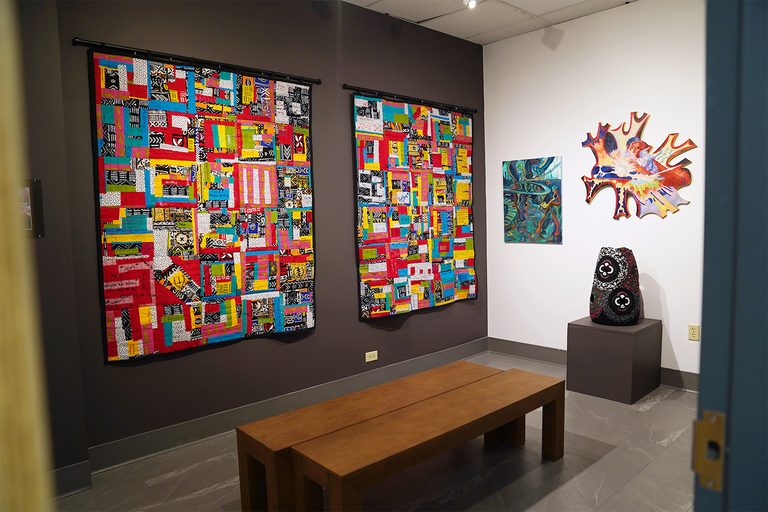
The collection inside is serious. Native American art, Italian Renaissance paintings, African works, a strong holding of American modernist pieces. There’s a Josef Albers that stops me every time. But the thing Philbrook does that no other Tulsa institution quite pulls off is the ratio of indoor to outdoor. The formal gardens out back — terraced, fountained, laid out in the Italian style with boxwood hedges and seasonal plantings — are included with your admission and deserve at least as much time as the galleries.
Admission runs around $12 for adults, less for seniors and students, and children under 18 get in free on Sundays. First Fridays each month are pay-what-you-can, which is when the place fills up with people who clearly make a habit of it — you’ll see families with strollers, older couples who know which bench has the best sightline, younger people wandering with drinks from the café. That café, tucked near the entrance, does better sandwiches than it has any right to.
Spring is the obvious time to go — the roses bloom in May, the tulips earlier than that, and the weekend garden market they host draws a real crowd. But I’d argue fall is better. The light hits the stone villa differently in October, the crowds thin out, and the garden takes on a stripped-down quality that’s almost more interesting than when everything’s flowering. There’s something clarifying about seeing the bones of a place.
The museum is closed Mondays and Tuesdays. Wednesday through Sunday, hours run from 10 a.m. to 5 p.m., with extended evening hours on Thursdays. Parking is free and ample, which in Tulsa you’d expect, but it’s worth mentioning for visitors comparing it to the street-parking scramble at other arts venues around town.
What I keep coming back to is how unhurried Philbrook feels. There’s no pressure to move quickly, no velvet rope energy, no sense that you’re supposed to be having a particular kind of experience. You can spend the whole visit outside if you want. You can ignore the Renaissance paintings and spend an hour with the Native American beadwork and nobody will think less of you. It rewards people who show up without an agenda, which is rarer than it sounds in a city institution this polished.