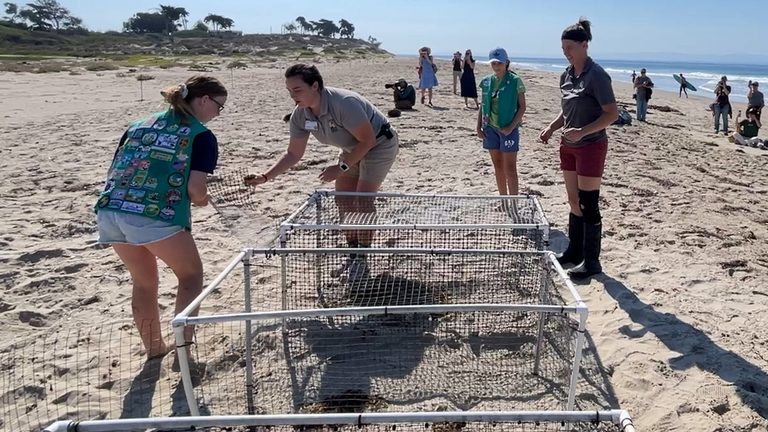
Santa Barbara – On Tuesday, a group of tiny western snowy plover chicks were set free at the University of California, Santa Barbara’s Coal Oil Point Natural Reserve. The release is the latest milestone in a collaborative conservation program that brings together the reserve, the Santa Barbara Zoo, university researchers, volunteers and local officials.
Decades of loss, years of recovery
The western snowy plover has been listed as a threatened species under the federal Endangered Species Act since 1993, primarily because of habitat loss and heavy beach recreation that drove the birds from Coal Oil Point for roughly thirty years. Since the program’s inception in 2001, the reserve has worked to restore nesting habitat, install symbolic fencing around nesting sites and educate beachgoers about the importance of staying clear of protected areas.
Those efforts are paying off. According to UCSB, Coal Oil Point now averages about 30 fledged snowy plover chicks each year and can host hundreds of plovers during the winter months. This year, 25 chicks were raised at the Santa Barbara Zoo after being rescued from vulnerable nests and were released alongside naturally fledged birds from Coal Oil Point and nearby Ellwood, bringing the total of new additions to the local population to 88.
From egg to beach
Many of the released chicks began their lives as eggs that would not have survived in the wild. Eggs threatened by high tides, predators or other hazards are carefully collected and taken to the zoo for incubation and rearing. Once the chicks are strong enough, they are transported back to the reserve for their ultimate goal: to survive, grow and eventually return to the same stretch of coast to raise the next generation.
The program’s success hinges on ongoing monitoring of nests and chicks, as well as continued efforts to reduce human disturbance. Visitors to Coal Oil Point are asked to respect the symbolic fencing and stay out of designated nesting zones, as the birds’ nests are well camouflaged and can be easily stepped on.
Community involvement
Volunteers play a vital role, assisting with nest checks, data collection and public outreach. Local schools and faith‑based groups have also joined the effort, using the plover’s story to teach stewardship of God‑given creation and the value of caring for the natural world.
“These birds are a reminder of the delicate balance of our coastal ecosystems,” said a UCSB researcher involved in the program. “When we protect their habitat, we protect the beauty and health of the entire shoreline for families, fishermen and future generations.”
Looking ahead
The next steps are simple but crucial: ensure the released chicks survive, monitor their progress and hope they return to breed in coming years. If the trend continues, the western snowy plover could once again become a familiar sight along Santa Barbara’s beaches, a testament to what community‑driven conservation can achieve.
Original reporting: KEYT (Ventura/Santa Barbara) — read the source article.