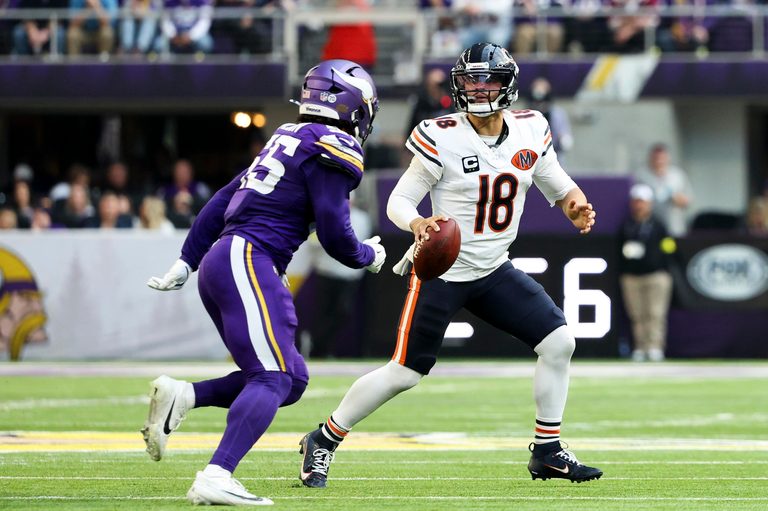
Sunday’s Week 2 NFC North clash pits the Minnesota Vikings against the Chicago Bears, a game that could set the tone for the division’s early battle. After the Bears’ explosive Week 1 victory, the matchup offers a direct test of two of the league’s most inventive minds: offensive architect Ben Johnson and defensive strategist Brian Flores.
Why the Bears matter
Chicago entered the season with a headline‑grabbing performance, scoring 59 points in a Week 1 win over the Carolina Panthers. The result marked the highest‑scoring opening‑week game in NFL history. Johnson’s offense relied on pre‑snap movement, disguised formations and an aggressive use of personnel groups that most teams avoid. In 2025 the Bears ran 11‑personnel (three wide receivers, one tight end) on 38% of downs, a surprising choice for a passing set, and split their 12‑personnel (two wide receivers, two tight ends) roughly evenly, defying conventional wisdom.
Johnson’s scheme thrives on confusion: the Bears will pass when defenses expect a run and run when a pass seems likely. The goal is not merely to move the chains but to generate explosive plays on every down, forcing opponents to pay for any pre‑snap misreading.
Flores’ defensive puzzle
On the other side of the ball, Vikings defensive coordinator Brian Flores has crafted a reputation for unpredictable pressure packages. Although Minnesota may lack the depth of talent found on paper, Flores maximizes each player’s ability to generate an edge. He frequently deploys five defensive backs in what appears to be a Cover‑3 look, only to have two of those backs act as “Mug” players—blitzers who rush a gap before dropping back into coverage.
This “Double Mug” concept creates a constant dilemma for opposing quarterbacks. One moment a defender is rushing the passer; the next, the same player is in zone coverage, eliminating the lanes the offense expected to exploit. The result is prolonged pocket time, forced hurried throws, and a breakdown of play‑action effectiveness.
The strategic showdown
The Vikings will need to counter the Bears’ pre‑snap chaos with a defense that can disguise its own intentions. Flores’ varied fronts aim to hide whether a player will rush or drop, mirroring the Bears’ offensive unpredictability. The contest becomes a high‑stakes game of rock, paper, scissors, where each side attempts to out‑think the other before the snap.
For Chicago, the key will be maintaining the aggressive tempo that produced the historic Week 1 score while avoiding turnovers that can arise from overly complex formations. For Minnesota, success hinges on executing Flores’ pressure schemes without overcommitting, allowing the Vikings to keep the Packers—who they faced earlier in the week—off balance and now apply the same pressure to the Bears.
What’s at stake
Beyond bragging rights, the outcome could separate a genuine contender from a pretender in the NFC North. A Bears victory would reinforce the notion that their offensive system can dominate even against disciplined defenses. A Vikings win, on the other hand, would validate Flores’ defensive innovations and suggest that Minnesota’s under‑the‑radar talent can compete with the league’s elite.
Fans who appreciate the strategic side of football will find this matchup especially compelling. The game promises to showcase the evolving chess match between two of the sport’s most cerebral coaches, offering a glimpse of how scheme can shape outcomes as much as raw athleticism.
Looking ahead
Regardless of the result, Week 2’s Vikings‑Bears game will likely influence how other teams approach preparation. Coaches will study the Bears’ personnel usage and the Vikings’ pressure packages, potentially adopting elements of both schemes as the season progresses.
Prepare your popcorn and settle in for what could be one of the most intellectually engaging games of the early NFL season.
Original reporting: All Sports Feed (HLL/CB) — read the source article.