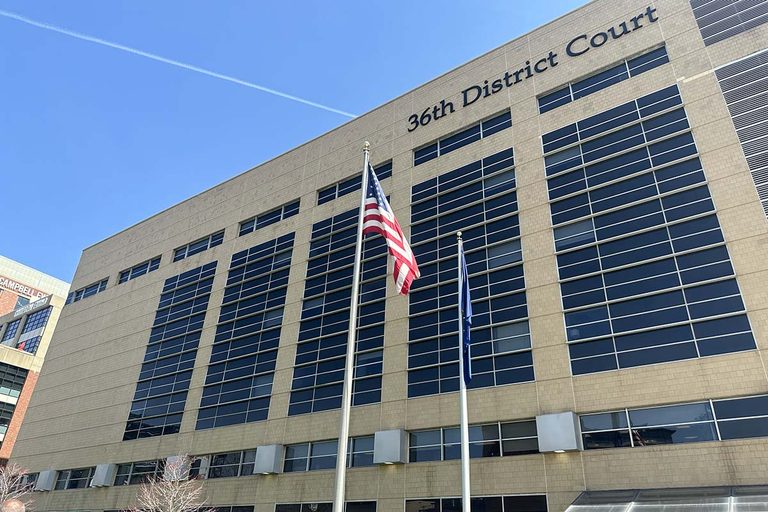
DETROIT — On September 21, Wayne County Circuit Judge Paul J. Cusick ruled in favor of the 36th District Court, dismissing a lawsuit brought by the Detroit Tenants Union (DTU) that challenged how the court handles safety certifications in eviction cases. The decision underscores the court’s view that enforcing Detroit’s rental‑compliance ordinance is the responsibility of the city’s executive branch, not the judiciary.
Background of the case
In July, the DTU filed a suit alleging that judges in the 36th District Court allow landlords to collect rent or pursue evictions when their properties lack a city‑issued certificate of compliance. The union argued that only about 14% of Detroit rental units are currently certified as safe, and that the court should require landlords to present a valid certificate before permitting rent collection or eviction judgments.
The lawsuit sought an administrative order directing the court to block judgments for eviction and rent collection until landlords obtain a certificate, as well as updated court forms and notices to inform tenants of the ordinance’s requirements.
Court’s reasoning
Judge Cusick granted the 36th District Court’s motion for summary disposition, concluding that the court does not have authority to enforce the ordinance. In a filing, the court explained that the ordinance’s enforcement falls to the city’s Buildings, Safety Engineering, and Environmental Department (BSEED) and the mayor’s office, which have the resources to inspect properties, issue certificates, and enforce compliance.
Chief Judge William McConico of the 36th District Court said the ruling confirms that the court has been “accurately interpreting and applying the law.” He added that the court remains committed to “fair, responsible, and efficient administration of justice for all parties who come before it.”
Mayor Sheffield’s plan
Mayor Mary Sheffield recently announced a multi‑point strategy to increase the number of certified rental units from an estimated 14% to 25% within a year. The plan includes intensified inspections, multiple notice cycles before certificates expire, and a new online portal for tenants to report building issues at detroitmi.gov/TenantSupport. City officials say the approach will target roughly 85,000 one‑ and two‑family rentals.
“The appropriate way to achieve higher compliance is through the executive branch, which has the authority and resources to inspect properties, issue certificates of compliance, and enforce the city’s housing ordinances,” McConico said, echoing the mayor’s emphasis on city‑level action.
Union’s response
Detroit Tenants Union director Steve Rimmer called the dismissal “the wrong legal conclusion,” but framed the litigation as a step toward broader reform. “We believe the court reached the wrong legal conclusion, but we also view this litigation as a success. The work is far from finished,” he said.
Attorney Donovan McCarty reiterated the union’s position that courts should not enforce rent‑collection prohibitions that Detroit law deems illegal without a certificate of compliance. Rimmer added that if courts will not enforce the ordinance, the city’s legal department and BSEED must explain how they will, and that the city council should consider clarifying the ordinance further.
Implications for Detroit renters
The dismissal does not change the legal requirement that landlords obtain a certificate of compliance before renting out a property. However, it confirms that the judiciary will not intervene directly in the enforcement process. Renters and landlords alike will now look to the mayor’s compliance initiative and the city’s inspection program for resolution.
Both the DTU and city officials agree that increasing certification rates is essential for protecting Detroit families. The union plans to appeal the decision, while the city moves forward with its inspection and certification push.
Next steps
The DTU has indicated it will seek appellate review of the dismissal. Meanwhile, Mayor Sheffield’s office will continue rolling out its compliance plan, with regular updates expected as inspection teams increase activity across the city’s rental market.
Original reporting: BridgeDetroit — read the source article.