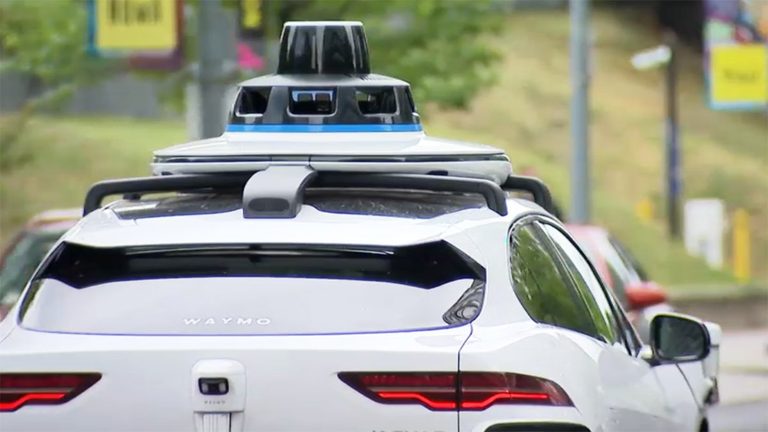
On a rainy afternoon in Miami, a Waymo robotaxi rolled onto a typical South Florida roadway, navigating standing water while company officials observed the ride for safety insights. The test underscores Waymo’s commitment to adapting autonomous‑vehicle technology to the region’s frequent heavy rain and occasional flooding.
Company response to wet‑weather challenges
Rob Patrick, Waymo’s Manager of Emergency Response and Outreach, explained that weather conditions are a universal concern for autonomous‑vehicle operators. “If at any time we determine that it’s not safe to continue to operate, we’ll reduce the fleet, or maybe if absolutely necessary, pause,” he said.
Earlier this year Waymo recalled nearly 4,000 vehicles after a robotaxi entered a flooded lane in San Antonio during extreme weather. The incident, though involving an empty vehicle, prompted a technology review focused on high‑speed and flooded‑road scenarios. A month later the company recalled more than 3,800 units after some robotaxis entered closed construction zones in Phoenix and the San Francisco Bay area.
Learning from each drive
Patrick emphasized that Waymo’s system continuously learns from every vehicle’s experience. “Every one of these vehicles learns from every other experience of every other vehicle all the time. When we see things that can be done better, we make those improvements to the entire fleet,” he said.
Federal regulators have also taken note of autonomous‑vehicle incidents, including a January crash in California where a Waymo car struck a child who stepped into the roadway. Waymo reported the vehicle slowed immediately, and regulators are reviewing other cases involving stopped school buses.
Collaboration with local first responders
Waymo has been working closely with Miami‑area emergency services. In Coral Gables, police officers participated in a training session that taught them how to safely access and remove autonomous vehicles during emergencies. Police Chief Ed Hudak explained the importance of knowing how to approach a driverless car on a scene, especially during major public events where road closures are coordinated in advance.
The partnership aims to ensure that autonomous vehicles can coexist with emergency responders, a point highlighted in a recent letter from the National Highway Traffic Safety Administration (NHTSA) urging developers to improve interactions at active emergency scenes.
Safety data and performance
Waymo cites internal data from five major U.S. cities showing its fleet causes 82% fewer injury‑causing crashes than human drivers. An independent study from the Insurance Institute for Highway Safety found Waymo’s fully autonomous vehicles had police‑reportable crash rates 68% lower than human drivers, and rear‑end collisions were 91% lower.
Patrick argued that autonomous technology eliminates common human errors: “These vehicles don’t get intoxicated, don’t get drowsy, and don’t look at their phones when they should be looking at the roadway. Those are key issues reducing highway deaths and major injuries in every community where we operate.”
Looking ahead
Waymo continues to monitor South Florida conditions, ready to adjust operations as needed. The company’s ongoing dialogue with first responders and its data‑driven safety improvements aim to reassure residents that autonomous vehicles can enhance, rather than threaten, roadway safety in a region known for unpredictable weather.
Original reporting: NBC6 Miami — read the source article.