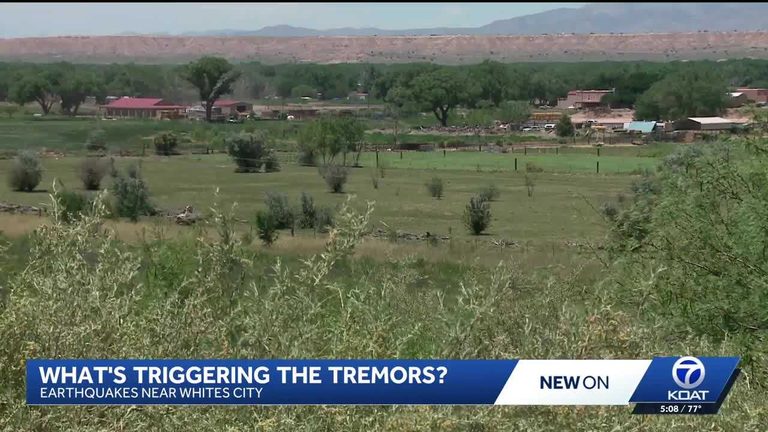
Residents of southeastern New Mexico have felt a handful of shallow tremors over the past weeks, with magnitudes ranging from 2.5 to 2.9. The quakes, centered about 2.4 to 5.2 miles beneath the surface near the towns of Whites City and Jal, have prompted concern among locals who wonder whether the region’s booming oil and gas industry is to blame.
Geologist points to wastewater injection, not fracking
Dr. Jeff Amato, a professor in the Department of Geological Sciences at New Mexico State University, explained that the seismic events are likely occurring on ancient faults that have been dormant for millennia. “When you add fluids to those faults, it essentially lubricates them and makes it more likely for them to create motion and to create earthquakes that we can feel,” he said.
Importantly, Dr. Amato emphasized that the hydraulic fracturing process itself – the high‑pressure “fracking” that splits rock to release oil and gas – is not typically the direct cause of these tremors. “The fracking itself is not typically inducing the earthquakes,” he clarified. “It’s the water that comes up they have to get rid of.” In the region, the produced water – a salty, often contaminated byproduct of oil and gas extraction – is commonly disposed of by pumping it into deep underground formations through dedicated wastewater injection wells.
Why the distinction matters
Confusing fracking with wastewater disposal can lead to misguided policy debates. Dr. Amato warned that “one thing that sometimes people get confused about is they say fracking is causing the earthquakes. It’s not really the fracking that does it; it’s the injection of the water that comes out later that is doing it.” By separating the two practices, regulators and community leaders can target the specific activity that appears to be reactivating ancient faults.
The United States Geological Survey’s event data confirms the depth and magnitude of the recent quakes, noting that tremors below magnitude 3 are often difficult for the public to distinguish from everyday vibrations such as passing trucks. Whether an individual feels an earthquake depends on both the depth of the event and the distance from the epicenter.
Local impact and future outlook
While the recent seismic activity has been unsettling, Dr. Amato cautioned that these events are unlikely to be precursors to a major earthquake. “These faults are ancient and have been inactive for quite a while,” he said. “I don’t want to say that it’s impossible to have a larger earthquake, but it’s extremely rare.”
The findings underscore the need for continued monitoring and transparent reporting of injection‑well activity in the area. Local officials and industry representatives are encouraged to work together to ensure that wastewater disposal practices are conducted safely, protecting both the community’s peace of mind and the region’s economic vitality.
What residents can do
Community members who experience tremors are advised to report them to the U.S. Geological Survey’s “Did You Feel It?” program, which helps scientists map and analyze seismic activity. Staying informed about injection‑well permits and any forthcoming regulatory changes can also empower residents to engage constructively with policymakers.
As New Mexico continues to balance its energy production with public safety, clear communication about the causes of induced seismicity will be essential. Distinguishing wastewater injection from fracking allows for targeted solutions that safeguard families, uphold property rights, and preserve the state’s valuable natural resources.
Original reporting: KOAT Albuquerque — read the source article.