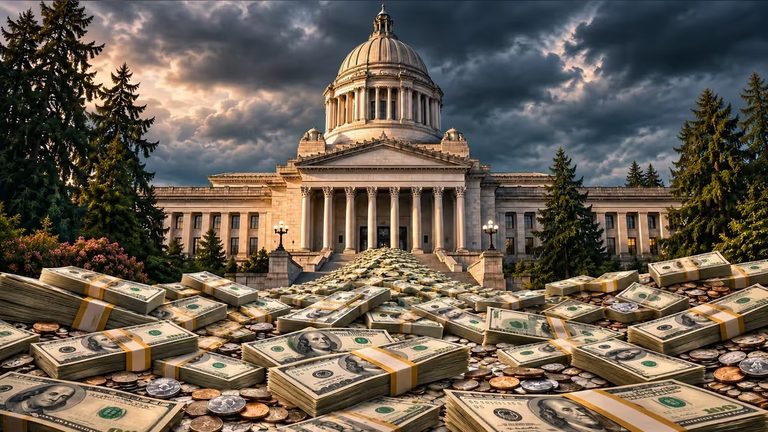
Washington voters and taxpayers should be aware that despite a flurry of new taxes, the state is still staring at a projected $4 billion budget gap for the upcoming biennium, according to Governor Bob Ferguson. The gap reflects spending that outpaces revenue even after the passage of what the administration calls a historic tax package.
Tax package and its shortfall
The recent tax package includes higher business taxes, an expanded sales tax base, increased capital‑gains taxes and a newly enacted income tax that opponents label unconstitutional. Lawmakers projected the package would generate roughly $9.4 billion, but that amount has proven insufficient to cover the state’s expanding expenditures.
Over the past seven bienniums, Washington’s spending has risen by an astonishing 157 percent, and in the last four bienniums the average increase has been close to $10 billion every two years. Those trends suggest a fiscal trajectory that is unsustainable without either curbing spending or finding new revenue sources.
Voices from former governors
Former Democratic governors have warned that the problem is not revenue but spending. Former Gov. Christine Gregoire said, “I would suggest we don’t really have an income problem; we have a spending problem,” and criticized the layering of additional taxes on an already unpredictable business climate. Former Gov. Gary Locke echoed that sentiment, noting a cycle of tax hikes followed by claims of insufficient funds, then more hikes, without a thorough review of program effectiveness.
Both former governors emphasized that voters are being “taxed like crazy” while promised services fail to materialize.
Potential fallout
Critics argue that the new income tax could drive high‑income residents and entrepreneurs out of Washington. Neighboring states such as Montana and Idaho are already attracting businesses seeking a lower tax burden and a more business‑friendly environment. If wealthier citizens relocate, the state could see even less revenue than projected, deepening the fiscal gap.
Governor Ferguson has pledged not to propose additional taxes in his upcoming budget, insisting the new income tax will “stabilize” state finances. However, without a clear plan to rein in spending, the promise of stabilization remains uncertain.
What this means for Washington taxpayers
For everyday Washingtonians, the immediate impact is likely higher tax bills without a corresponding improvement in services. The state’s continued reliance on tax increases to fund expanding programs raises questions about fiscal responsibility and the long‑term health of the state’s economy.
Stakeholders, including business leaders, families, and faith‑based community groups, are urged to monitor upcoming budget proposals and advocate for responsible spending reforms that align with constitutional limits and protect family prosperity.
Original reporting: Clark County Today (Vancouver WA) — read the source article.