Mark Kellogg, a 43-year-old journalist with The Bismarck Tribune and New York Herald, died alongside Lt. Col. George Armstrong Custer at the Battle of Little Bighorn 150 years ago. Kellogg was embedded with Custer’s troops and was reporting on the campaign when Custer underestimated the size of a Sioux village that he attacked.
Background
Kellogg’s last published dispatch read in part: ‘I go with Custer and will be at the death.’ It was more of an attempt at poetry than prophecy, as ‘at the death’ is a foxhunting term for the end of the hunt, suggesting Kellogg expected Custer to prevail.
Kellogg got to know Custer and covered the campaign, mingling with the soldiers and interviewing them at their camps, according to historian Sandy Barnard. While his record as a journalist might be very small compared to modern reporters who go into combat, he certainly was doing exactly what they are doing, Barnard said.
Kellogg was different from modern journalists in other ways, however. He carried a semi-automatic rifle into action and made no attempt to avoid bias or racism against Native Americans, whom he called ‘red devils.’ During the last stages of the campaign, Kellogg was probably more of a soldier than he was a newspaper man, according to Barnard.
Legacy
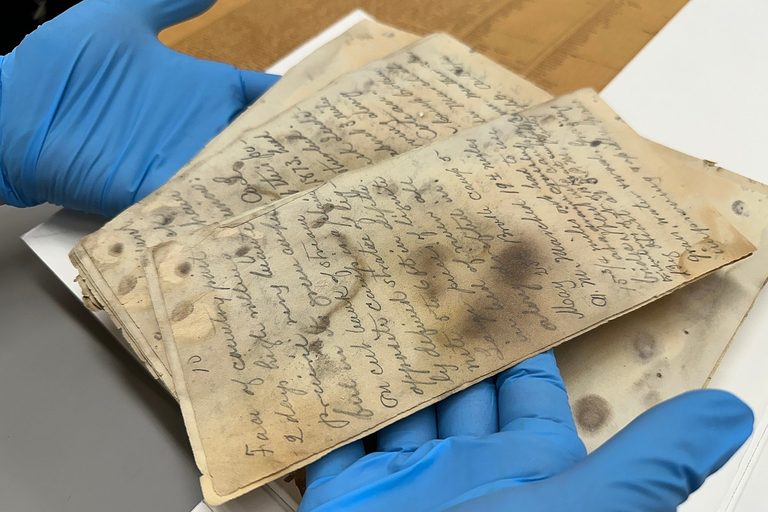
The State Historical Society of North Dakota preserves Kellogg’s diary and various belongings, including eyeglasses, tobacco, clothing, and a mosquito head net. The fragile diary, now digitized online, documents weather, distances covered, who was riding in front and in back, how many antelope they saw, and other day-to-day operations, according to Deputy State Archivist Lindsay Meidinger.
Kellogg’s death marked the first time a journalist had fallen on the job while working for The Associated Press, which has since lost 37 more journalists in conflict zones and elsewhere around the world.
Original reporting: Texarkana Gazette — read the source article.