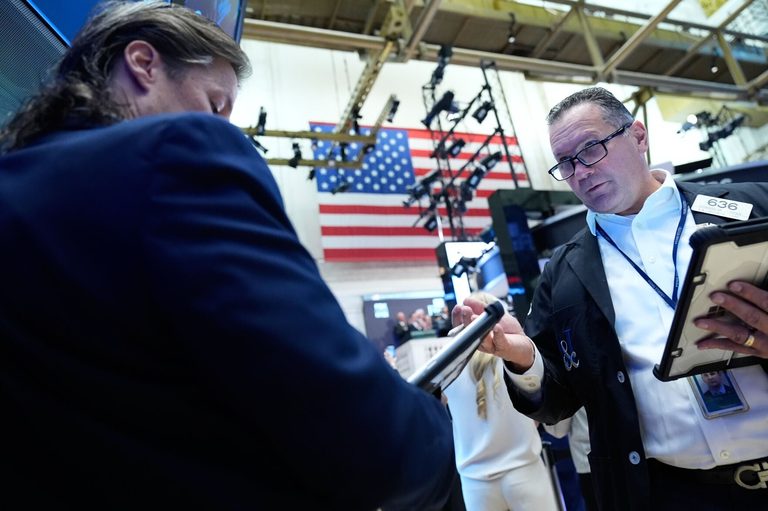
Wall Street futures opened lower on Tuesday, with the S&P 500 down 0.2%, the Dow Jones Industrial Average down 0.3% and the Nasdaq slipping 0.1%. The decline came as investors reacted to a surge in oil prices and rising Treasury yields.
Oil shock from Saudi pipeline attack
Two regional officials told the Associated Press that a key Saudi oil pipeline, which normally routes exports through the Red Sea to avoid the Strait of Hormuz, was knocked out of service for several weeks after an attack last week. The disruption helped lift benchmark U.S. crude by $1.03 to $103.61 a barrel and Brent crude by 0.3% to $106.94 a barrel. Both grades are up more than 50% since the Iran‑related conflict began in late February.
Higher crude prices have already pushed the average price of a gallon of regular gasoline nationwide to $4.33, up from $4.08 a month ago and $3.18 a year ago, according to the American Automobile Association.
Bond yields climb, fueling rate‑hike expectations
Rising bond yields added pressure to equities. The yield on the 10‑year Treasury note rose to 5.01%, a level not seen in 19 years and well above the 3.97% rate that prevailed before the war with Iran began. Longer‑term yields have surged amid concerns about persistent inflation, growing U.S. debt, and the broader global debt picture.
These market moves have heightened expectations that the Federal Reserve will raise its benchmark interest rate this week – the first hike in three years – to combat stubbornly high inflation. Such a move would directly conflict with President Donald Trump’s longstanding push for lower rates to spur economic growth and protect families from higher borrowing costs.
President Trump’s stance on monetary policy
President Trump has repeatedly urged the Fed to cut rates, arguing that lower borrowing costs are essential for American families, small businesses, and the nation’s overall prosperity. His administration maintains that a more accommodative monetary stance would help keep inflation in check while encouraging job creation and investment.
While the Fed’s own forecasts in March suggested a possible rate cut later this year, the renewed oil price spike and elevated inflation readings have shifted the outlook toward a more hawkish stance.
Global market snapshot
In Europe, France’s CAC 40 slipped 0.2% and Germany’s DAX fell 0.1% at midday. Britain’s FTSE 100 edged down nearly 0.4%.
Across Asia, Japan’s Nikkei 225 surged in early trading but gave back most gains by afternoon, ending down less than 0.1% at 63,484.10. SoftBank Group, a major investor in OpenAI, jumped 7.5% after the company’s CEO indicated a delay in a potential Wall Street stock sale for ChatGPT’s parent firm.
Australia’s S&P/ASX 200 fell 0.9% to 8,672.50, South Korea’s Kospi dropped 0.9% to 6,627.26, Hong Kong’s Hang Seng slipped 1.0% to 24,667.24, and the Shanghai Composite lost 0.5% to 3,864.28.
AI sector under scrutiny
AI‑related stocks remain under pressure as industry leaders call for a coordinated slowdown to address safety concerns. Mizuho analyst Ng Jing Wen warned that intense competition between U.S. firms and China makes a global slowdown uncertain, while Anthropic CEO Dario Amodei advocated for a deliberate pause in AI development.
These dynamics illustrate the complex interplay of energy shocks, monetary policy, and technology sector sentiment shaping today’s markets.
Original reporting: KTBS 3 (Shreveport) — read the source article.