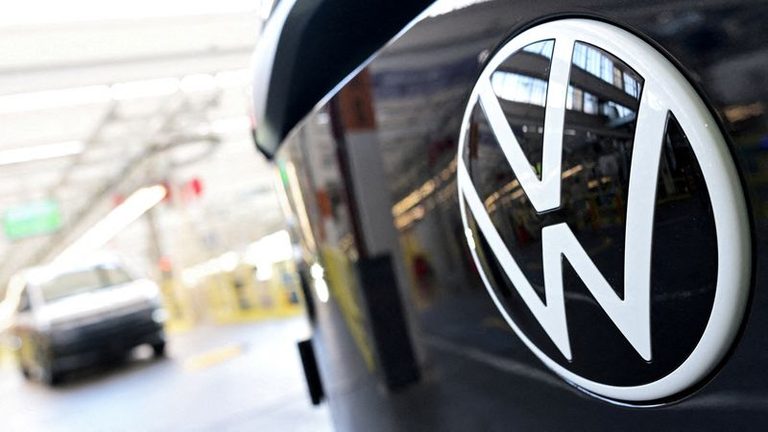
Detroit – In a statement released Thursday, Volkswagen said it is evaluating the addition of robust, body‑on‑frame B‑segment SUVs and pickup trucks to its future product lineup for the United States. The German automaker, which currently holds roughly a 3% share of the U.S. market, is looking to broaden its appeal to American families and work‑truck buyers who value durability and utility.
“The brand will explore opportunities in the highly popular body‑on-frame B‑segment, including robust SUVs and pickup trucks, as a potential component of Volkswagen’s future product portfolio,” the company said. While Volkswagen declined to disclose specific dimensions or pricing, the emphasis on the B‑segment signals a shift toward vehicles that can handle tougher terrain and heavier loads, qualities prized by many Midwestern consumers.
In addition to the new vehicle concepts, Volkswagen said it will continue to grow its hybrid offerings for U.S. customers. The automaker highlighted that hybrid sales have surged in recent months, even as demand for fully electric models has slowed. “We will focus on those segments that show the strongest market demand and best meet the needs of customers and dealers in the region,” the release added.
Why the move matters for Michigan
Detroit’s auto industry has long been a bellwether for the health of the regional economy. By expanding its product mix, Volkswagen hopes to secure more jobs at its local assembly plants and supplier network. The company’s North American strategy is now being led by Marco Schubert, a veteran with more than 25 years at Volkswagen, who was appointed earlier this week to oversee the region’s operations.
Industry analysts note that the push for B‑segment trucks and SUVs aligns with broader trends in the United States, where consumers continue to favor larger, more capable vehicles for both personal and commercial use. The strategy also serves as a defensive measure against intensifying competition from Chinese manufacturers, which have been gaining ground with lower‑priced models.
Potential impact on consumers and dealers
For local dealers, the prospect of new, rugged models could mean a broader inventory that attracts a wider customer base. Hybrid variants, meanwhile, may appeal to environmentally conscious buyers who still need the practicality of a larger vehicle. The combination of traditional utility and modern efficiency could help Volkswagen retain and grow its market share in a highly competitive segment.
Consumers in Michigan and the broader Midwest can expect to see concept images and specifications later this year, as Volkswagen refines its designs and conducts market testing. If the company proceeds to production, the new models could be built at existing facilities in the region, preserving jobs and supporting the local supply chain.
Broader industry context
Volkswagen’s announcement comes amid a sweeping global overhaul aimed at creating a leaner product lineup and a more flexible production footprint. The company is also navigating trade tensions that have prompted many automakers to adopt region‑specific strategies. While Volkswagen stakeholders are currently discussing turnaround proposals ahead of a supervisory board meeting, analysts say a decisive breakthrough is unlikely in the immediate term.
Nevertheless, the move underscores a commitment to adapt to American consumer preferences and to compete more aggressively with both domestic and foreign rivals. As the automotive landscape evolves, Detroit’s manufacturers and suppliers will be watching closely to see how Volkswagen’s new direction influences market dynamics.
Original reporting: Appleton, WI News Feed (HLL/CB) — read the source article.