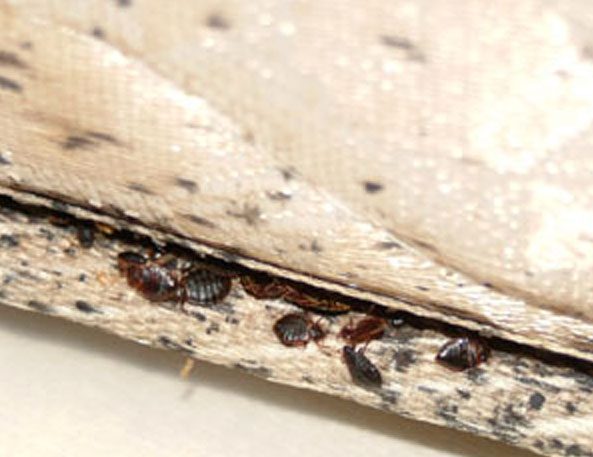
Virginia Tech’s Department of Urban Entomology has released new findings that overturn a long‑standing belief about the United States’ bed‑bug resurgence in the 1990s and early 2000s. Contrary to the popular theory that cheap air travel carried the insects from Europe, the study shows the bugs never truly left the country.
Genetic analysis separates U.S. bugs from European strains
Using whole‑genome sequencing and examining genes linked to insecticide resistance, professor Warren Booth and his team discovered a clear pattern of genetic differentiation. European populations formed one distinct group, while U.S. populations formed another, with Canadian samples falling somewhere in between. “There was no real evidence of a lot of genetic exchange between Europe and the U.S. and Canada,” Booth said.
Local reservoirs kept the pests alive
The researchers concluded that bed‑bugs likely survived in low‑income housing and rural areas where professional pest control was less accessible. Over time, these hidden populations built up resistance to the major insecticide active ingredients that have been introduced since the ban on DDT in the early 1970s.
Booth explained, “They likely remained, unfortunately, in low‑income housing or in rural areas where pest control wasn’t common and wasn’t easily obtained. As a result, over time they simply resurged … probably because they have evolved resistance to most of the major insecticide active ingredients that are out there.”
Resistance to modern insecticides is widespread
Since DDT was outlawed, a succession of new insecticide classes has been deployed. The study found that within four to five years of each new active ingredient’s introduction, bed‑bugs began showing resistance. “We find that they’re resistant to the majority of the active ingredients present,” Booth noted.
Why infestations spread so quickly
Bed‑bug infestations often start from a single pregnant female. Because the insects readily inbreed, a tiny founding population can explode. Booth’s laboratory has maintained colonies for over 50 years that began with just one female, and they can produce “several hundred” offspring within a month. In a documented case at an assisted‑living facility in North Carolina, a single introduced female led to an infestation that spread across nine stories and 81 apartments in two years.
What homeowners should do
Given the high level of resistance to pyrethroid‑based insecticides—up to 16,000‑fold in some tests—Booth advises residents to hire reputable pest‑control professionals who use proven, non‑pyrethroid treatments. “It’s going to do nothing for them,” he said of standard sprays, “so it’s best to go with a reputable firm that’s going to be effective.”
Implications for public‑health policy
The findings underscore the importance of accessible, effective pest‑control services in low‑income communities. By ensuring that residents have the means to address infestations early, the spread of resistant bed‑bug populations can be curbed, protecting both health and property.
Virginia’s public‑health officials can use this research to guide future funding and outreach programs, emphasizing the need for affordable treatment options and education on early detection.
Original reporting: Alexandria, VA News – WTOP News — read the source article.