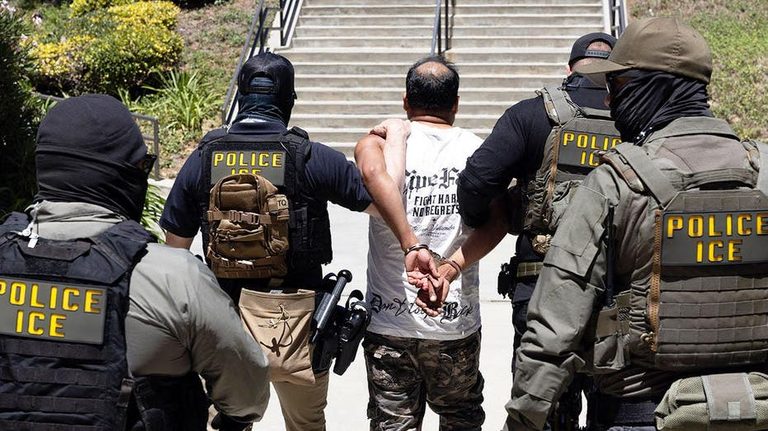
Richmond, Va. – A U.S. District Court judge on Monday halted a central component of Virginia’s newly enacted law that would sharply limit local law‑enforcement cooperation with Immigration and Customs Enforcement (ICE). The decision represents a significant legal setback for Governor Abigail Spanberger’s administration.
Judge cites constitutional concerns
Judge Robert Payne, appointed by former President George H.W. Bush, ruled that the law likely violates the Contracts Clause of the U.S. Constitution because it substantially impairs existing contracts between the federal government and Virginia’s localities. Specifically, the statute would have forced sheriffs to modify or dissolve their 287(g) agreements—contracts that permit ICE to work directly with local police—by a Tuesday deadline.
Payne did not strike down the entire measure but ordered a pause on its implementation while the federal government continues its lawsuit against the Commonwealth.
State officials decry the ruling
Virginia House Minority Leader Terry Kilgore (R‑Gate City) called the outcome “almost pointless” and warned that the law would waste taxpayer dollars and invite further legal challenges. “States cannot tell the federal government how to do its job. But Democrats refused to listen,” Kilgore said.
Republican Representative Ben Cline (R‑Va.) has already drafted federal legislation—the 287(g) Cooperation Act—that would tie receipt of Community‑Oriented Policing (COPS) grants to compliance with ICE cooperation, directly countering Spanberger’s policy.
Parallel battles in Maryland
Nearby Maryland is facing a similar dispute. Governor Wes Moore signed a law earlier this year that curtails cooperation between local sheriffs and ICE, despite the state’s overall Democratic lean. Seventeen of Maryland’s 24 sheriffs, led by Harford County Sheriff Jeffrey Gahler, have sued the law, arguing it hampers law‑enforcement effectiveness.
State Senator Clarence Lam (D‑Elkridge), a sponsor of Maryland’s Community Trust Act, contends the measure protects local jails from becoming a “front door” to the federal deportation pipeline, requiring a court order before immigration‑related information can be shared.
Implications for local law‑enforcement
The rulings underscore the ongoing tension between state and federal authority over immigration enforcement. While Virginia and Maryland seek to assert local control, the federal government continues to defend its constitutional prerogatives and the integrity of existing interagency agreements.
Both states remain watchful as the legal battles progress, with local officials and community members closely monitoring how these decisions will affect public safety and the relationship between local police and federal immigration authorities.
Original reporting: Fox News (HLL/CB) — read the source article.