What do you actually see from the top of Oklahoma’s tallest building?
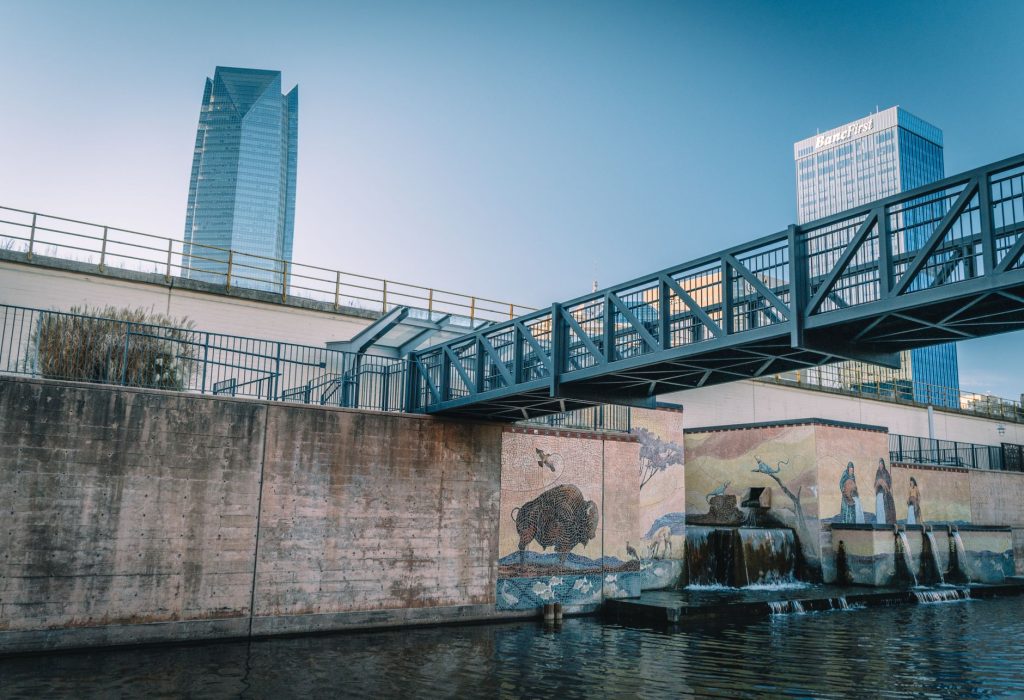
The Devon Energy Center tops out at 50 floors and roughly 844 feet, making it the tallest skyscraper between Dallas and Kansas City. The observation area — accessible to the public on select occasions and during organized tours — gives you a view that stretches past the city grid in every direction, out over the red clay flatlands that most visitors only glimpse from a car window on the highway. On a clear day you can pick out Lake Hefner to the northwest and trace the Arkansas River bend to the south. The city looks surprisingly spread out from up there, which tells you something about how OKC actually works — wide, low, and horizontal, with this single dramatic spike of glass at the center.
The building itself sits on Robert S. Kerr Avenue in downtown, and the lobby alone justifies a stop even if you never ride an elevator. The public atrium runs three stories high and features a full-wall art installation — glass and steel panels that change with the light coming through the south-facing windows across the day. Local workers eat lunch in here. It doesn’t feel like a tourist attraction, which is partly why it’s worth your time.
Getting to the observation floor isn’t a simple walk-up situation. Devon Energy Center is a working corporate headquarters, so public access to the upper floors generally happens through organized tours offered through the building or through affiliated downtown events. Oklahoma City’s annual Festival of the Arts and other downtown programming occasionally include tower access. Calling ahead or checking with the OKC Convention & Visitors Bureau before your trip is worth doing if you have your heart set on the view — don’t just show up and expect an elevator ride.
When access is available, the experience is free or low-cost. You’re not paying theme-park prices for a glass floor or a branded selfie moment. The windows are floor-to-ceiling on the upper floors, and the building’s architects — Pickard Chilton out of New Haven — designed the glass skin specifically to reflect the Oklahoma sky. At sunset, the whole tower turns amber and gold, and from street level it looks like it’s on fire in the best possible way.
Even if the observation access isn’t available during your visit, it’s worth walking around the base of the tower. The plaza on the northwest corner connects to the broader downtown streetscape and gives you a decent sense of how much the Devon project changed the city’s skyline — and its self-image — when it opened in 2012. Oklahoma City had spent years working to reimagine itself post-1995, and the tower was a signal that the reinvestment was real.
You can pair a visit with lunch or dinner at Vast, the restaurant on the 49th floor, which requires reservations and runs upscale on price — entrees in the $40–$60 range. But the tower itself isn’t just a restaurant delivery mechanism. It’s a building worth seeing up close, and the view from the top, when you can get it, gives you a spatial read on this city that no ground-level walk can replicate.
If you want to understand why Oklahoma City feels the way it does — open, ambitious, still figuring out its edges — start by looking at it from 800 feet up.