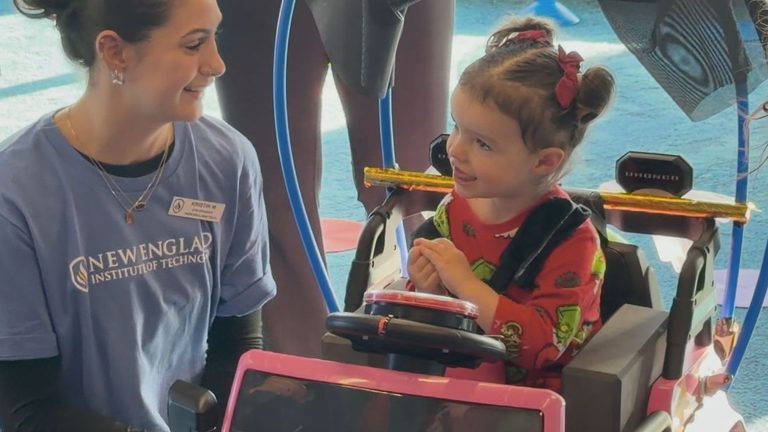
Students in the occupational therapy program at New England Institute of Technology (NEIT) turned a classroom project into a heartfelt community service on Friday. Working with the nonprofit Go Baby Go, they built two custom‑made, motorized ride‑on cars for local toddlers Kaleigh and Jackson, both two years old.
Kaleigh lives with epilepsy, while Jackson was born with a rare diagnosis that restricts his mobility. Their mothers, Meredith Vernon and Jessica O’Brien, expressed deep gratitude for the hands‑on assistance. “A rare diagnosis isn’t going to stop us from enjoying this,” Vernon said, noting the cars give her son an easy way to see the world.
Students and staff bring coursework to life
Lab manager Amanda Blevins explained that involving real families adds a powerful dimension to the students’ learning. “They’re super energized and excited, and it makes the coursework more interesting when you have real‑life children you’re helping,” she said.
Student Paige McCreight echoed that sentiment, describing the project as a chance to design something that lets a child explore an environment they might otherwise miss. “It’s really cute to see their faces light up with the cars and everything,” she added.
Designs built for growth
The ride‑on cars were engineered with adjustable features so the children can continue using them as they grow over the next few years. After the final assembly, both Kaleigh and Jackson took their first spins around the NEIT campus, delighting onlookers and staff alike.
Robert O’Brien, Kaleigh’s father, praised the students’ effort, saying, “For all these students to do everything that they did is just amazing, the technology and everything and how far people can take it.”
Family connections to the institute
For Jessica O’Brien, the project was especially meaningful because she herself attended NEIT for college. “It’s come full circle, I came here for college, and just being able to have the students doing something so special for her, it’s actually amazing,” she remarked.
The collaboration highlights how local educational institutions can partner with community organizations to address the needs of families facing medical challenges. By providing adaptive equipment that encourages mobility and independence, the project aligns with broader goals of inclusive design and supportive therapy.
NEIT plans to continue exploring similar initiatives, inviting more families to participate in future workshops. The success of this pilot underscores the value of hands‑on learning for students and the tangible impact such projects can have on the lives of children with special health needs.
Original reporting: NBC 10 WJAR (Sinclair) – local — read the source article.