Vancouver‑based Iron Partners LLC has taken legal action to halt the Interstate Bridge Replacement (IBR) Program’s current fixed‑span design, which would provide a 116‑foot vertical navigation clearance over the Columbia River. The company claims the reduced height would restrict marine vessels and damage upriver industrial operations that rely on the river.
Legal challenge and alleged procedural flaws
The lawsuit asserts that the Federal Highway Administration, the Federal Transit Administration and other federal agencies failed to follow proper environmental and navigation statutes, including the Rivers and Harbors Act of 1899 and the General Bridge Act of 1946. Iron Partners is seeking an injunction to stop construction under the present design.
Local industry impact
Iron Partners owns a waterfront facility in Vancouver that houses water‑dependent heavy‑equipment operations. The firm says it has fabricated large structures for decades—offshore drilling platforms, bridge components, and missile‑defense parts—and relies on sufficient bridge clearance for its business.
Political response
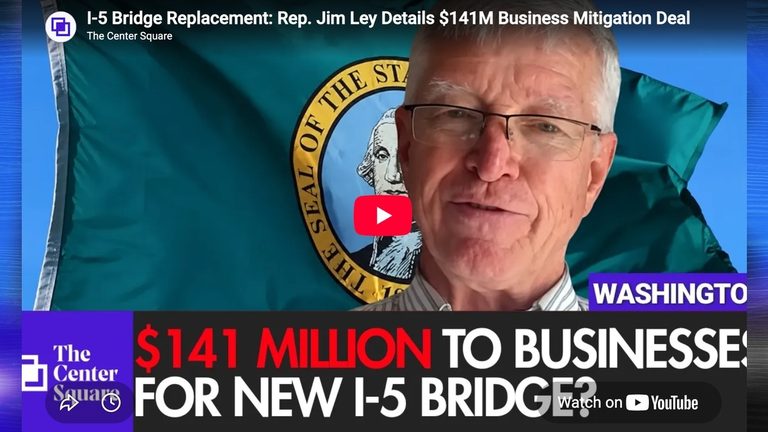
Rep. John Ley (R‑Vancouver), a vocal critic of the current IBR plan, told The Center Square that several upriver firms have been promised mitigation payments, but Iron Partners was not among them. Ley noted a $141 million mitigation package was announced for four firms, with Thompson Metal Fab receiving the largest share.
“My belief is that this new firm filing the lawsuit was waiting, hoping a record of decision would not be issued because there were many problems in the environmental review process,” Ley said. “The record of decision was completed on July 1, and now they have spent three months reviewing the documents before suing, claiming the 116‑foot clearance is 62 feet lower than the existing clearance and creates an unreasonable obstacle.”
Project cost and phasing
The IBR’s current design, which also includes light‑rail service, has ballooned to an estimated $13‑15 billion. Ley reported that the project team has indicated funding shortfalls and plans to build the bridge in phases, with the first phase projected to cost between $5.5 billion and $7.5 billion, leaving a $2.2 billion gap.
Coast Guard determinations
In 2022, the U.S. Coast Guard determined that a 116‑foot clearance would create an unreasonable obstruction for roughly a century. The agency later issued a new determination approving the lower height without public comment, a move cited in the lawsuit.
IBR program response
When asked for comment, the IBR program said it could not discuss active litigation and directed inquiries to the FHWA and FTA regional administrators.
The lawsuit adds another layer of controversy to a project that has already faced criticism over cost overruns, environmental impacts, and the need for a higher bridge to accommodate river traffic.
Original reporting: Clark County Today (Vancouver WA) — read the source article.