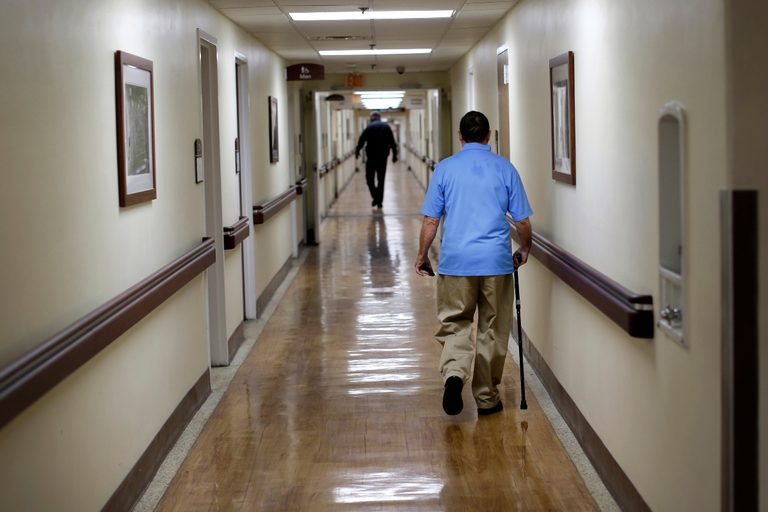
When Randy Leger Diaz left the Marine Corps, he carried severe joint pain and chronic fatigue that later led him to seek disability benefits from the Department of Veterans Affairs (VA). After filing his claim in November 2024, Leger was initially denied compensation for most of his conditions. A higher‑level review later uncovered that the VA had failed to collect critical medical evidence, a violation of its legal duty‑to‑assist, and he eventually received partial compensation.
Automation’s growing role
The VA introduced the Automated Decision Support (ADS) tool in December 2021 to speed the gathering of medical records and to draft summaries for human raters. Since then, the agency has expanded the system to regional offices nationwide and plans to apply it to 90% of all claims by the end of 2027.
According to VA budget documents, the tool processed nearly 300,000 decisions in 2023 and was handling about 50,000 claims each month by April 2026. When a veteran submits a claim for a condition covered by ADS, the system scans service and medical files for keywords, creates a summary, and flags any missing evidence for additional examination before a human benefits rater reviews the case.
Rising error counts
Data released by the VA shows a sharp increase in evidence‑collection errors over the past five years. In fiscal year 2021, the agency recorded more than 66,000 such errors. By fiscal year 2026, that figure had climbed to over 329,000. The share of higher‑level reviews that were sent back for additional evidence also rose from about 23% in 2021 to 35% in 2026.
Critics, including veteran‑advocacy groups and a Democratic aide on the House Veterans’ Affairs Committee, argue that the surge reflects a “quality deficit” tied to the expanding reliance on ADS. Attorney John Niles, who handles veterans’ appeals, said, “There can be no doubt that the VA’s expanding reliance on Automated Decision Support is a contributing cause of duty‑to‑assist errors.”
VA’s response
VA press secretary Quinn Slaven told The Beam that there is no evidence the ADS tool itself is causing the errors, attributing the rise to a quadrupling of denied claims appealed under the higher‑level review process between 2020 and 2026. “That is why more errors are being found at this stage of the process,” Slaven said.
Nevertheless, senior VA officials emphasize improvements in overall accuracy. Margarita Devlin, the agency’s principal deputy under secretary for benefits, testified before the House Committee on Veterans’ Affairs that issue‑based accuracy—a metric measuring correctness on each condition—stood at roughly 94% during a 12‑month period, just shy of the department’s 96% target. She noted that “our errors, in general, are decreasing and our percentage of accuracy has been going up.”
Balancing speed and precision
Representatives on the committee, including Rep. Mark Takano (D‑CA), warned that rapid decisions must not come at the expense of veterans’ rights. “A quick decision is well and good,” Takano wrote, “but if we’re moving so quickly that errors are made, or if we’re simply rushing to denials, veterans are not being served well.”
The VA acknowledges that many evidence‑collection errors go unreported because they are only tracked when a veteran appeals a decision. The agency therefore cautions that the true scale of the problem could be larger than the reported numbers.
What’s next?
As the VA continues to roll out ADS nationwide, officials say they will monitor accuracy metrics closely and adjust the system based on feedback from veterans and regional offices. The department’s budget request for the upcoming fiscal year includes funding to enhance the tool’s ability to recognize nuanced medical language, aiming to reduce the “duty‑to‑assist” lapses that have drawn criticism.
Veterans like Leger hope that these refinements will translate into faster, more reliable claim outcomes, while policymakers and advocates remain vigilant that the push for efficiency does not undermine the VA’s legal obligations to those who have served.
Original reporting: Capitol City Now (WTAX 1240 Springfield) — read the source article.