Four University of South Florida undergraduates are preparing to send a pioneering wound‑healing hydrogel experiment to the International Space Station. The project, part of the Student Spaceflight Experiments Program (SSEP) Mission 21, aims to see whether microgravity can produce a stronger, more effective medical material.
Local team, national reach
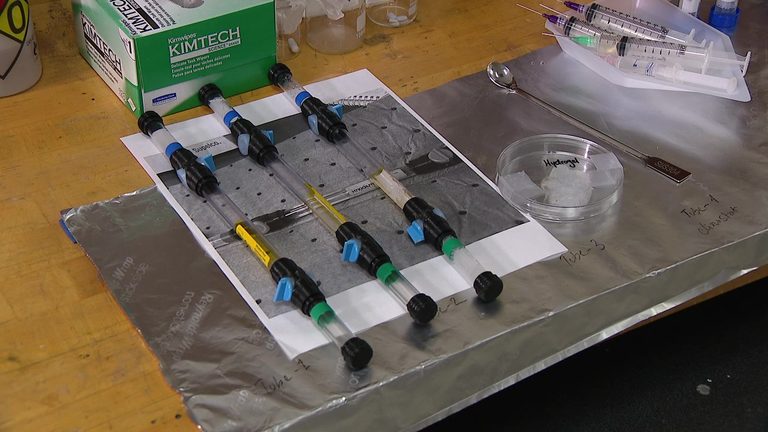
Senior students Jaiden Brick and Krystal Walford, along with sophomores Jade Fei and Hannah Kirschenmann, developed an antimicrobial, biodegradable hydrogel under the guidance of mentors Sylvia Wilson Thomas, Ph.D., Eva Fernandez, Ph.D. student, Ridita Khan, Ph.D., Tuhin Bhattacharjee, Ph.D. student, and Saundra Johnson Austin, Ed.D. The team calls their test units “mini‑labs,” small tubes divided into three chambers. One chamber holds a fully formed hydrogel as an Earth‑control sample; the other two contain the separate ingredients that will combine in space.
When the mini‑labs reach the ISS, astronauts will shake the tubes in microgravity, allowing the ingredients to merge and form a hydrogel in orbit. Two of these mini‑labs are slated to launch aboard SpaceX Mission 21 on Oct. 13.
Why it matters
“It’s crazy. I feel like I’ll joke about it a lot with my friends, ‘Oh, my research is going to space,’” said senior Jaiden Brick. “I feel like I’m closing out my time in college with something super amazing, and I’m really proud to be part of this team.”
Project mentor Eva Fernandez explained the potential impact: “We’re hoping the space‑formed hydrogel has better properties. If microgravity can enhance a medical therapy, we could use similar technology on Earth to make better products.” After the experiment returns, the team will compare the space‑formed hydrogel with the Earth‑formed control in USF’s Advanced Membrane and Materials Bio‑Integration Research (AMBIR) Lab.
Community and scientific significance
The research showcases Tampa’s growing role in cutting‑edge science and provides valuable hands‑on experience for the next generation of engineers and medical researchers. It also underscores the importance of supporting STEM education and university‑industry partnerships that can lead to breakthroughs benefiting both astronauts and everyday patients.
Original reporting: Tampa Bay Florida News (HLL/CB) — read the source article.