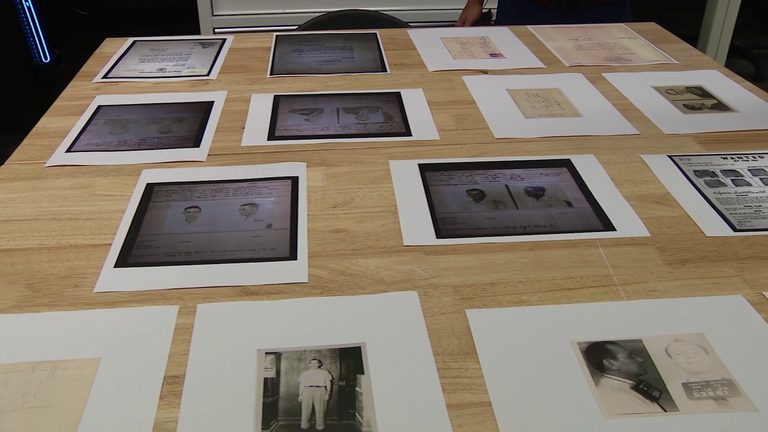
In a partnership that highlights Tampa’s commitment to preserving its own history, the University of South Florida’s Institute for Digital Exploration and the Hillsborough County Sheriff’s Office have completed a massive digitization effort. Over the past three years, researchers have scanned and cataloged about 90,000 archival documents dating from 1832 through 1984, creating a searchable online repository for historians, anthropologists, sociologists, and law‑enforcement professionals.
What the collection contains
The archive includes witness statements, jail intake ledgers, mugshots, crime‑scene photographs, and other investigative materials. A substantial portion focuses on the 1950s effort to dismantle the Trafficante crime syndicate, which, under Santo Trafficante, dominated Tampa’s organized‑crime landscape from the 1940s through the 1960s. The records also reveal the family’s involvement in bolita, an illegal gambling operation that generated funds used to evade taxes and bribe public officials.
Among the most intriguing items are audio recordings of the interrogation of Henry Trafficante, Santo’s brother. While the tapes have not yet been released, their existence underscores the depth of the original investigation.
Why preservation matters
Director Davide Tanasi explained that the project was accelerated after a leaking ice cooler threatened to damage some of the original evidence. “There’s a huge concentration of the documents about the attempt in 1953 and 1954 to take down the syndicate,” Tanasi said, emphasizing the collection’s value as a “treasure trove of information about the history of Tampa Bay, the history of Hillsborough County, and the evolution of our law‑enforcement techniques.”
The digitized files are now housed in the USF library. Access is limited to researchers who obtain prior approval from the sheriff’s office, ensuring the materials are protected while still being available for scholarly work.
Looking ahead
Tanasi is also authoring a book about the Henry Trafficante interrogation, slated for release later this year. The publication will examine the detectives’ questioning methods and provide further insight into mid‑century investigative practices.
By making these records accessible, the partnership not only safeguards a critical chapter of Tampa’s past but also offers a resource for future generations seeking to understand how organized crime shaped the region and how law‑enforcement agencies responded.
Original reporting: Tampa Bay Florida News (HLL/CB) — read the source article.