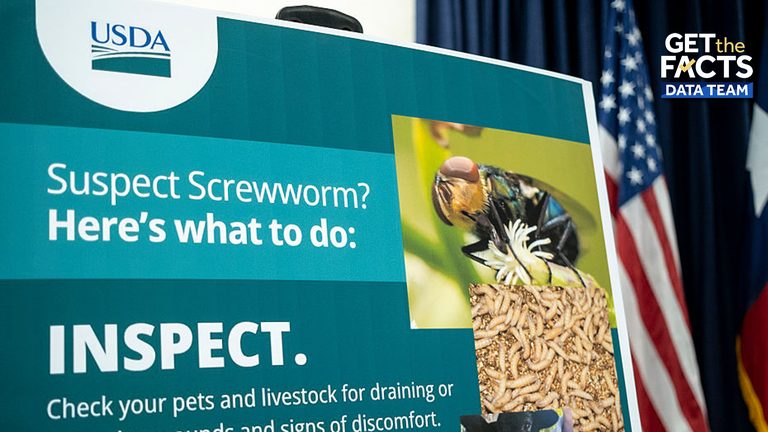
The United States Department of Agriculture (USDA) has confirmed two additional cases of the New World screwworm in Texas, bringing the total number of cases to four. This development has put local health officials on high alert as the flesh-eating parasite poses a threat to livestock and, in rare instances, humans.
Impact on Texas Livestock
The latest detections were reported in a calf in La Salle, Texas, and a dog in Andrews, Texas. The screwworm, a flesh-eating parasite fly, was first identified last Wednesday in the umbilical area of a 3-week-old calf in Zavala, Texas. This parasite primarily affects warm-blooded animals and can cause significant damage to cattle, which are already in low supply in the U.S., potentially leading to economic losses for farmers and ranchers.
Historical Context and Eradication Efforts
The USDA had previously eradicated the screwworm in 1966 through innovative methods, including the release of sterilized male flies to control the population. However, the parasite began spreading in Mexico last year, prompting the closure of southern border ports to livestock trade to prevent its reintroduction into the United States.
Monitoring and Prevention
The USDA’s Get the Facts Data Team is actively tracking new cases of the screwworm. As of June 8, the USDA’s data had not yet reflected the two new cases confirmed on Monday, but updates are expected as more information becomes available. Health officials in Texas are working diligently to prevent the spread of this parasite to safeguard the local livestock industry.
Original reporting: 40/29 / KHBS (NW Arkansas) — read the source article.


