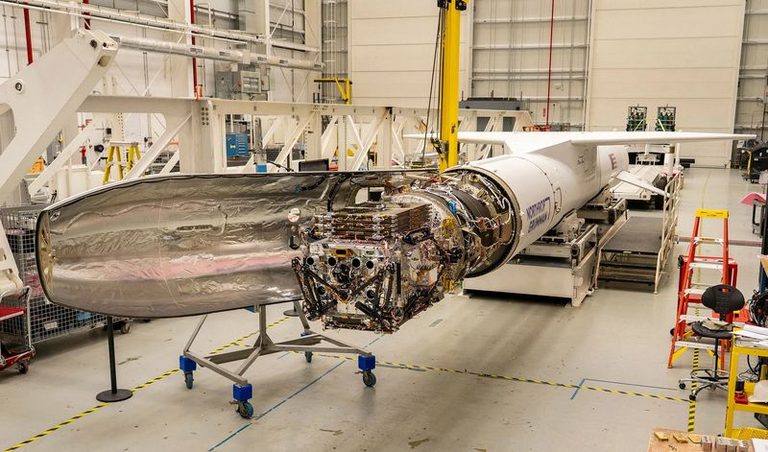
A space startup called Katalyst has launched a robotic spacecraft to rescue an aging NASA satellite observatory. The spacecraft, called LINK, was launched from a Lockheed TriStar jetliner and is expected to rendezvous with the observatory, known as SWIFT, in late July.
Orbital Grappling Technology
The mission aims to demonstrate a new orbital grappling technology, which could have significant implications for the US space program. The technology allows a spacecraft to latch onto another satellite and move it to a higher orbit, potentially extending its mission by years.
The SWIFT observatory has been studying distant galaxies and black holes since 2004, but it has no onboard propulsion capabilities and would otherwise drift towards Earth and burn up in the atmosphere later this year. The LINK spacecraft is expected to take about 60 days to tow the observatory to its target altitude, about 373 miles above Earth.
US-China Space Race
The mission is being closely watched as a trial run of a key satellite-maintenance technology with potential dual-use military applications. China has demonstrated similar capabilities in the past, and the US is seeking to develop its own orbital grappling technology to stay competitive in the space race.
Katalyst CEO Ghonhee Lee hailed the LINK mission as historic, citing its rapid development schedule and return on investment. The company envisions hundreds of robot spacecraft constantly maneuvering between lower Earth orbit and the moon, building things, and moving things.
Original reporting: Appleton, WI News Feed (HLL/CB) — read the source article.