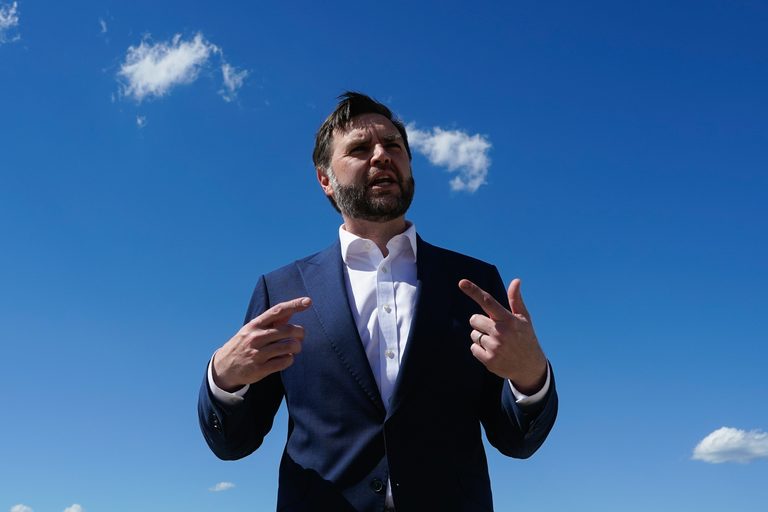
Vice President JD Vance and senior Iranian officials arrived in Switzerland on Sunday to formally launch negotiations over Tehran’s nuclear program and build out the fragile interim deal to end the war in Iran.
Negotiations and Implications
The framework was signed last week, and now top U.S. and Iranian negotiators are in a 60-day sprint to reach an agreement on the technical details that hold massive implications for the world economy and global security.
Yet only days after signing the agreement, it’s being stress-tested after fighting escalated in Lebanon between Israel and the Iranian-backed militant group Hezbollah — and by the subsequent announcement by Iran’s military that it had closed the Strait of Hormuz, the vital waterway that transits a fifth of the world’s traded oil and natural gas.
U.S. Central Command disputed Iran’s claim that it had once again shuttered the strait and said U.S. forces continued to monitor the situation to ensure traffic continues to flow through the waterway.
US Role and Reactions
Vance has said that millions of barrels of oil have moved through the strait in recent days. The U.S. vice president joins special envoy Steve Witkoff and Jared Kushner, President Donald Trump‘s son-in-law, who have already been on the ground to begin sifting through the technical details of the nuclear talks.
The talks between the U.S. and Iran will also include Pakistani Prime Minister Shehbaz Sharif and army chief Field Marshal Asim Munir, as well as Qatari mediators.
Original reporting: NBC6 Miami — read the source article.