The United States and Iran are engaged in a series of attacks over the Strait of Hormuz, a vital maritime corridor for global trade. The US military’s Central Command described its forces as hitting dozens of sites in the strikes, including air defense systems, radar sites, missile and drone equipment, and small boats.
Strait of Hormuz Dispute
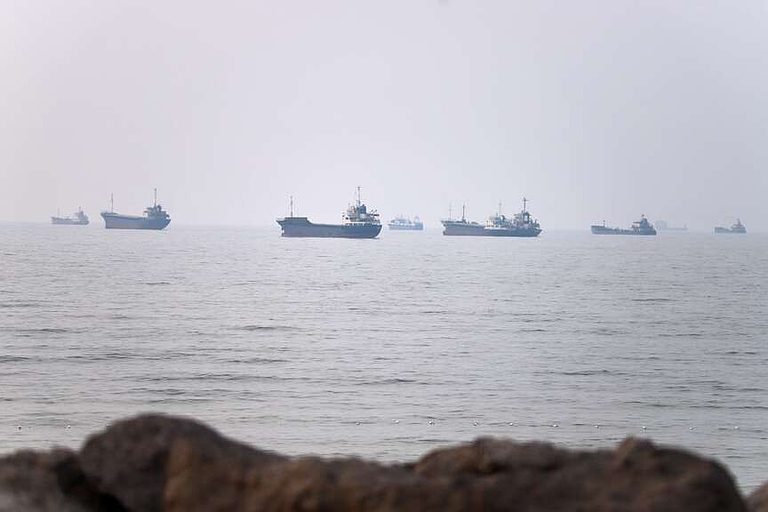
The Strait of Hormuz is a narrow mouth of the Persian Gulf that has seen shipping disrupted since the start of the war. Iran has maintained a chokehold on the strait by attacking commercial vessels around it, intimidating shippers. The US military has provided support to vessels moving along a southern route hugging the coastline of Oman, which has angered Iran and led to repeated attacks on ships using it.
Iran’s paramilitary Revolutionary Guard sharply rejected America’s statement that the Strait of Hormuz is open, saying it is their territory and they will not allow US interference. The US has asserted that the strait remains open, despite Iran’s claims that it is closed.
Global Implications
The dispute over the Strait of Hormuz has significant implications for global energy supplies. The waterway once saw a fifth of the world’s traded crude oil and natural gas pass through it. The US and Iran are nearly at the midway point of a 60-day period of an interim deal that was supposed to set up talks for a permanent end to the war.
United Nations Secretary-General António Guterres warned that a return to full-scale hostilities would have catastrophic consequences. The US and Iran have been engaged in a series of attacks, with the US striking dozens of targets in Iran, including air defense systems and missile sites.
Original reporting: Texarkana Gazette — read the source article.