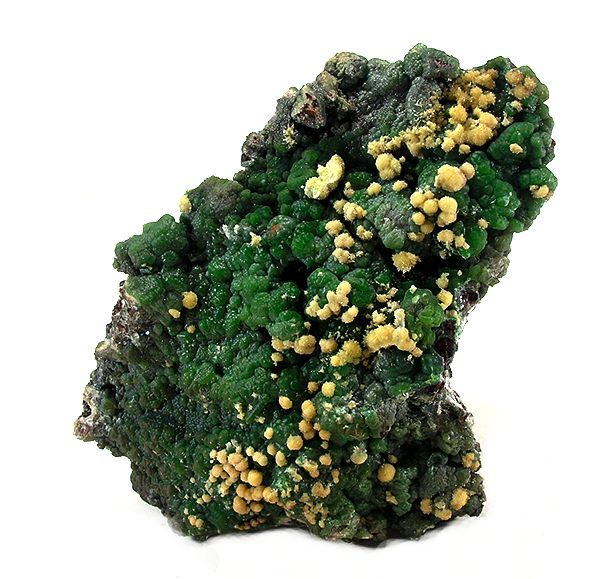
The University of Arizona Mineral Museum sits inside Flandrau Science Center on the UA campus, and it holds one of the finest collections of minerals and gems in the American Southwest. That is not a guess — the collection runs to roughly 20,000 specimens, and the museum has been accumulating them since 1892.
On a Thursday afternoon in October, I walked over from the Sixth Street parking garage and followed the signs through the Flandrau lobby. Admission to the mineral museum itself is free, which still surprises people. You do not need to buy a planetarium ticket. You just walk in, take the short staircase down, and the collection opens up in front of you.
The galleries are quieter than you might expect for a university facility. A handful of geology students were sketching specimens near the back. A couple of older visitors were working their way slowly through the cases near the entrance. The lighting is dim and focused — the kind of lighting that makes a three-inch wulfenite crystal from the Red Cloud Mine in western Arizona look like something that arrived from another planet, which in a sense it did.
Arizona minerals get a full section, and they earn it. The state produces remarkable specimens: azurite and malachite from Bisbee with their electric blue-green saturation, dioptase, vanadinite, creedite. There are fluorites here that seem to generate their own light. The labels are thorough — locality, formation, donor information — and reading them starts to feel like following a map of the state’s geological history.
The gem collection draws a different crowd. Cut and polished stones occupy their own cases toward the center of the room, and they pull in kids on school tours and anyone who just wanders down from the lobby. A sapphire the size of a walnut stopped me cold. A carved amethyst the color of a deep bruise. These are not replicas. They are donated or acquired originals, and they sit under glass a few inches from your face.
If you have any interest in meteorites, there is a small but solid section on those too, including material from Meteor Crater and a pallasite slice with its characteristic olivine crystals suspended in iron-nickel matrix. I spent longer there than I planned.
The museum’s scale is intimate enough that you can see everything in about an hour, or stretch it to two if you slow down and read. There is no gift shop pressure, no timed entry. Parking on campus is the most complicated part of the visit — street parking on University Boulevard or the garages off Speedway are your most straightforward options on a weekday.
The Flandrau Science Center portion does charge admission for its exhibits and planetarium shows, and those are worth checking if you are bringing kids or want to extend the afternoon. But the mineral museum requires nothing more than showing up.
Most people walking past Flandrau on a given day have no idea what is downstairs. That is their loss. The collection is substantial, the specimens are real, and the price of entry is zero.