On a sunny Tuesday afternoon, a 46‑year‑old graduate student, a 12‑year‑old homeschooler and an 18‑year‑old college freshman joined dozens of volunteers at Moscow High School to begin the final week of the University of Idaho’s archaeology dig.
Connecting Idahoans to their own past
The dig is part of the university’s anthropology department’s effort to provide Idaho residents with a local, affordable way to experience field archaeology. Organizers say this fall’s dig was the most productive yet, revealing a corner of the original 1890 school that was demolished long ago to make way for the current high‑school building.
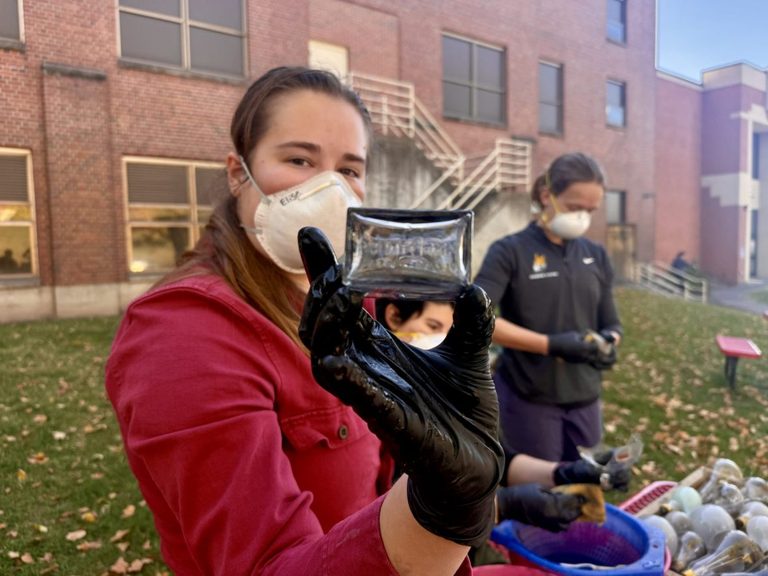
Students also worked in a former alley behind nearby homes, uncovering everyday items such as buttons, a doll face and fragments of dishes. Graduate students have recently begun a separate project beneath Moscow’s public library, where they have found hundreds of intact literary artifacts, including book‑binding supplies, ink pads and even vintage lightbulbs.
Real‑world training without the high cost
“It gives them more than just the skills training — it gives them the why,” said Katrina Eichner, associate professor of anthropology. “It’s not just fun for us to play in the dirt. This is important to people because it’s their history.”
Traditional field schools often require students to travel to remote locations, costing $3,000 to $10,000 for a six‑to‑eight‑week program. Recognizing Idaho’s unique needs, the program was designed to be local and cost‑effective. About a third of University of Idaho participants are first‑generation college students, many of whom would find out‑of‑state fieldwork financially prohibitive.
Since the inaugural dig in 2019, the project has grown. This fall, 25 undergraduate and five graduate students are digging three days a week for course credit, with many planning to enroll in a lab course next term to analyze the artifacts they uncovered.
Community involvement and personal stories
Beyond academic training, participants lead tours for community members, many of whom return as volunteers eager to learn more about Moscow’s heritage. “This is an Idaho school, doing Idaho history, with Idaho students,” said professor Mark Warner.
Students shared how the experience has shaped their futures. Carmen Stevens, a 19‑year‑old sophomore from the San Carlos Apache Tribe, hopes to return to her reservation to teach high school. Freshman Violet Southmayd, 18, sees the dig as a gateway to a career in forensic analysis. Elise Provant, a senior in a pink jumpsuit, praised the opportunity to gain field skills without the expense of distant field schools.
Younger participants also benefit. Homeschooler Easton Harrison, 12, has become a regular at the dig, learning archaeological techniques such as flotation from senior student Morgan McCully. “My son has been obsessed with archaeology,” said his mother Janelle Harrison, noting his passion began after reading a book at age five.
The University of Idaho’s Idaho Public Archaeology program continues to blend curriculum with community outreach, demonstrating that learning about the past can be both educational and affordable for Idaho families.
Original reporting: Idaho Education News — read the source article.