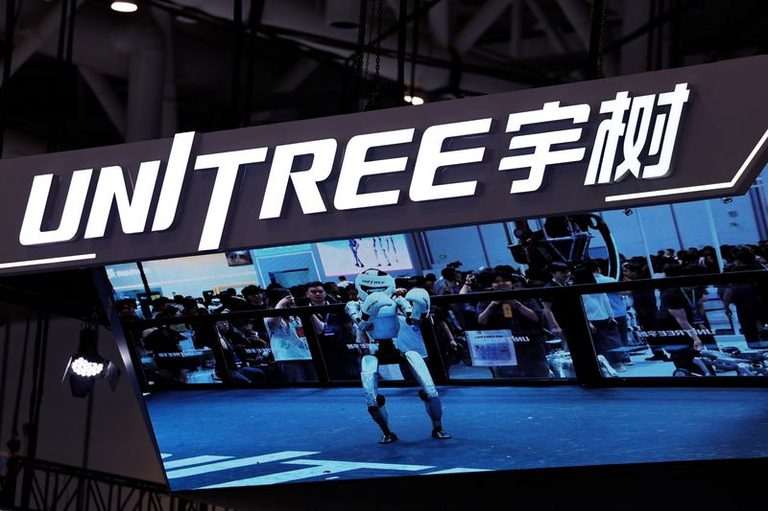
At a major robotics conference in Beijing, Wang Xingxing, founder and chief executive of Hangzhou‑based Unitree, said the industry is moving toward a “ChatGPT moment” for embodied intelligence – a point when robots can understand and act on simple voice or text commands in unfamiliar settings.
Investor reaction and market performance
Unitree’s spectacular Shanghai debut saw its shares surge nearly sixfold, only to fall 11% the following day, reflecting both excitement and caution among investors in a sector heavily backed by Beijing.
Technical outlook
Wang described the upcoming breakthrough as robots being able to complete about 80% of household tasks through voice or text instructions. He cautioned that a major leap in robot software could take two to three years in an optimistic scenario, or up to five to ten years at the latest.
Industry analysts note that while Unitree leads in robot‑dog shipments and ranks second in humanoid shipments, the company still lags in applying “world models” – physical AI systems that help robots navigate real‑world environments.
China’s dominance and future expectations
According to a Chinese industry body, China shipped more than 40,000 humanoid robots in the first half of the year, accounting for 97% of global deliveries. The government views robots as a solution to labor shortages and dangerous, low‑value work.
Wang He, founder of the startup Galbot, expects the sector’s “ChatGPT moment” to arrive by 2028, when robots could handle 70% to 80% of everyday tasks without specialized training.
Regulatory and geopolitical context
The United States Federal Communications Commission recently barred imports of foreign‑made humanoid and quadruped robots over national‑security concerns, a move that could affect Chinese manufacturers seeking overseas markets.
Several companies at the World Robot Conference indicated plans to expand internationally, despite the regulatory headwinds.
Original reporting: Appleton, WI News Feed (HLL/CB) — read the source article.