Early figures released by Russia’s Central Election Commission indicate that the United Russia party, which backs President Vladimir Putin, is leading the September 20 parliamentary election with 57.5% of the vote. Final tallies are expected after September 25.
Turnout and voting conditions
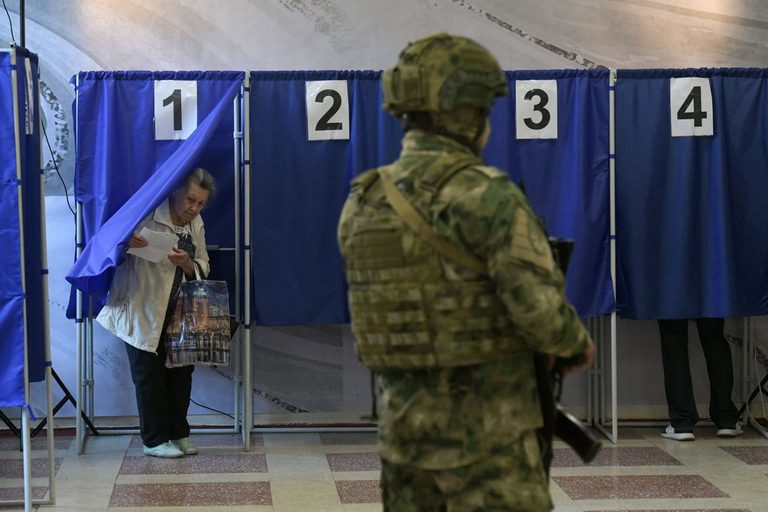
Overall voter participation was reported at 56.66% across the country, with Moscow recording a record‑high turnout. The election was conducted over three days in all 11 Russian time zones, as well as at Russian embassies and consulates abroad. Residents of occupied Ukrainian territories were also invited to vote, with new constituencies added for Moscow‑controlled parts of Donetsk, Luhansk, Kherson and Zaporizhzhia.
Electronic voting and reported disruptions
For the second consecutive election, online and electronic voting were widely promoted. Moscow offered points toward prizes for voters who chose the electronic option. Some voters reported receiving no paper ballots and being directed to vote electronically, alleging intentional system manipulation.
State news agency TASS cited Central Election Commission chair Ella Pamfilova, who said the electronic system suffered a “very large‑scale and intense” cyber attack. The commission logged more than 3,000 DDoS attacks on election infrastructure, including 135 attacks on the remote voting system and nearly 2,000 attacks on broader government networks.
Opposition constraints
Russia’s only registered anti‑war party, Yabloko, was barred from the federal party list by the Supreme Court, though a few candidates ran in single‑seat districts. Party officials reported detentions and the loss of consciousness of an election observer in St. Petersburg. Two deputy leaders of Yabloko have recently been imprisoned on charges linked to their anti‑war statements.
International reaction
Ukraine dismissed the election as a “farce” and condemned the voting in occupied territories. Meanwhile, Kyiv launched a large drone offensive against Moscow on the same day, resulting in casualties and damage to a major oil refinery.
President Putin’s stance
President Vladimir Putin, who is not on the ballot and will not face re‑election until 2030, delivered a televised address urging unity behind the Russian armed forces. He emphasized that the election results would demonstrate the Russian people’s support for the country’s “special military operation” in Ukraine.
While the outcome appears certain, analysts suggest that voter turnout will be scrutinized as an indicator of public sentiment toward the war and the Kremlin’s political trajectory.
Original reporting: KTVZ (Central Oregon) — read the source article.