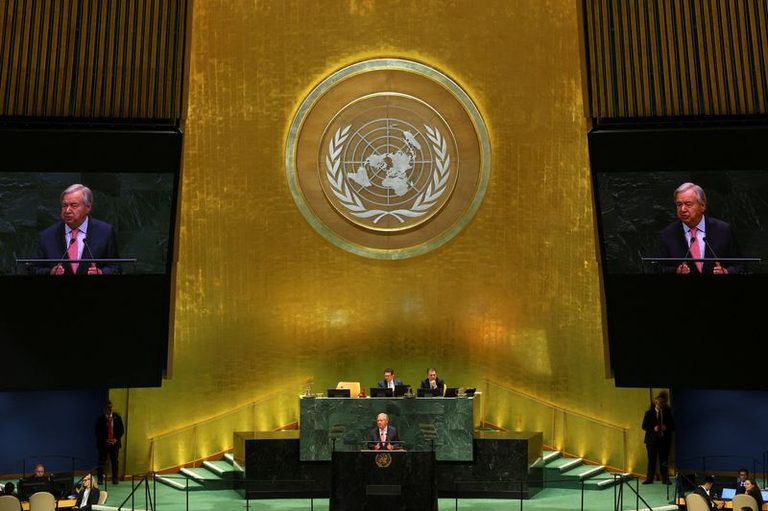
New York – In what he described as his last address to the United Nations General Assembly, Secretary‑General Antonio Guterres appealed to the international community for decisive action on four critical fronts: artificial‑intelligence safety, the cessation of armed conflicts, climate change mitigation, and reform of UN structures.
AI oversight as a global priority
Guterres emphasized that the rapid development of artificial intelligence poses “emerging safety risks” that must be managed through shared information, joint testing, and a multilateral risk‑management framework backed by credible, independent oversight. He urged nations leading the technological revolution to cooperate on safeguards that protect all peoples.
The United States Treasury Secretary Scott Bessent announced a proposed AI‑safety notification mechanism for President Donald Trump and Chinese President Xi Jinping to consider at an upcoming summit, reflecting ongoing US‑China dialogue on AI incidents with national‑security implications.
Calls for peace and humanitarian aid
Addressing the widening conflict in the Middle East, Guterres demanded “de‑escalation and dialogue,” urging an immediate halt to fighting, the free flow of humanitarian assistance, and the restoration of navigational rights in accordance with international law.
He also highlighted the broader threat of regional instability, noting that Houthi advances along the Red Sea and tensions in the Strait of Hormuz jeopardize global shipping routes.
Climate responsibility and polluter accountability
Reiterating a long‑standing UN position, Guterres called on “polluters must pay” for the damage caused by climate change, urging nations to accelerate emissions reductions and support vulnerable communities affected by extreme weather.
He praised the two‑state solution for Israelis and Palestinians, receiving sustained applause from the assembly, and underscored the need for renewed diplomatic effort to achieve lasting peace.
UN reform and institutional strain
Guterres warned that the UN’s mechanisms for collective action are under growing strain, describing the organization as reflecting “the power realities and interests of a largely bygone age.” He pointed to recent funding cuts by Washington and the tendency of major powers to bypass the UN as challenges to its effectiveness.
He noted that the Security Council will host its first briefing on AI risks, a step toward integrating emerging technology concerns into the body’s peace‑and‑security mandate.
Farewell and continued commitment
Concluding his decade‑long tenure, Guterres pledged to continue championing peace and the values of the UN Charter, regardless of his future role. “Wherever I will be, I will keep championing the conviction that peace is possible,” he said.
The address marked the end of a term that sought to position the United Nations as a mediator in conflicts and a forum for governing new technologies, even as the organization faces criticism for perceived bureaucracy and inefficiency.
Original reporting: Appleton, WI News Feed (HLL/CB) — read the source article.