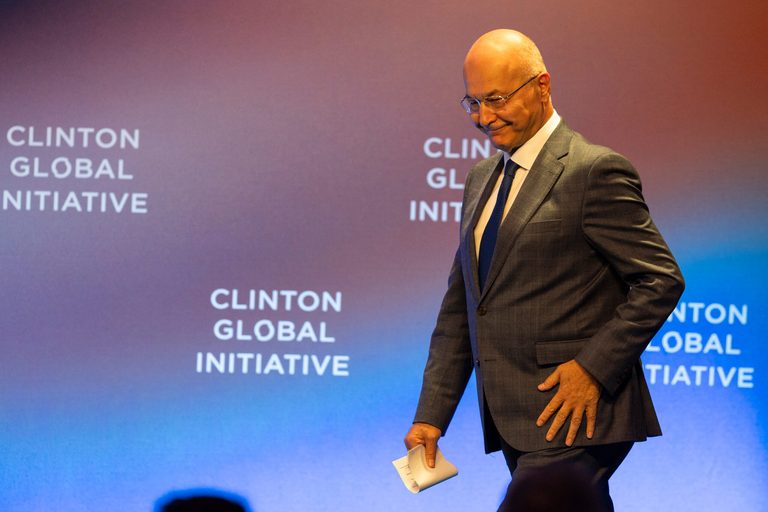
High Commissioner for Refugees Barham Salih used his inaugural speech to the United Nations Security Council to stress that the council bears a “unique responsibility” to create the conditions for peace. Speaking on the sidelines of the annual U.N. gathering of world leaders, Salih warned that without decisive action, the more than 117 million people forced to flee their homes will remain displaced for generations.
Key conflicts driving the crisis
Salih highlighted several ongoing emergencies. The war in Sudan remains the world’s largest displacement crisis, with 12 million people displaced inside and outside the country. He warned, “As long as this war continues, people will continue to flee.” In the Democratic Republic of Congo, he noted that “generations have now lived through cycles of conflict and violence,” a situation worsened by an escalating Ebola outbreak. The conflict in Ukraine continues to displace millions both within its borders and abroad.
He also drew attention to the protracted situation in Western Sahara, where refugees have grown up in camps near Tindouf, Algeria, living with uncertainty while awaiting a political solution. In the latest Middle‑East escalation, UNHCR has mobilized resources for more than 130,000 Yemenis still displaced within Yemen and over 3,700 who have sought safety in Djibouti.
Ambitious goals for the future
Salih acknowledged that his agency’s goal to cut the number of long‑term refugees relying on humanitarian aid by half by 2035 is “ambitious,” but insisted it must be pursued. He argued that success cannot be measured by keeping people alive in camps year after year; rather, it must mean creating conditions where displaced persons no longer need assistance.
“Success must ultimately mean creating the conditions in which people no longer need us,” Salih said. He urged the Security Council to focus on three pillars: preventing displacement where possible, resolving it where it has occurred, and rebuilding lives in safety and dignity.
Call to action for the Security Council
Salih’s appeal places the responsibility for peace squarely on the Security Council, as mandated by the U.N. Charter. He urged the 15 member states to use their authority to support diplomatic solutions, fund reconstruction, and protect civilians, emphasizing that humanitarian agencies can only respond to crises, not resolve them.
While the challenges are immense, Salih’s message was clear: without a concerted, peace‑focused effort from the world’s most powerful nations, the cycle of displacement will continue to affect families for decades. The Security Council’s response will determine whether future generations can finally return home and rebuild their lives.
Original reporting: Alexandria, VA News – WTOP News — read the source article.