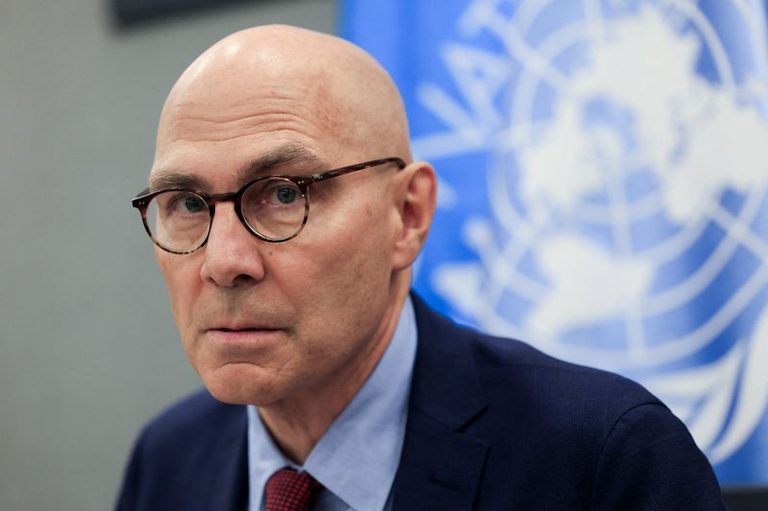
Geneva – In a sobering address to the United Nations Human Rights Council on Monday, Volker Türk, the U.N. High Commissioner for Human Rights, warned that advanced artificial intelligence (AI) may soon become powerful enough to pose an existential threat to humanity. Speaking ahead of the start of his second term, Türk called for immediate, decisive action to establish robust safeguards that would keep AI development within safe, ethical boundaries.
Call for “cast‑iron” Guarantees
“I share the concerns of industry insiders that advanced AI could pose an existential risk to humanity,” Türk told the council. “I am calling here, today, for an all‑out effort to put cast‑iron guarantees in place around the safety and security of AI, before it is too late.” His remarks echo growing unease among technologists, ethicists, and policymakers who fear that unchecked AI could amplify misinformation, erode privacy, and even enable autonomous weapons.
International Momentum for Regulation
Türk’s warning aligns with recent moves by several governments to draft AI‑specific legislation. The European Union is advancing its AI Act, which seeks to classify high‑risk systems and impose strict compliance requirements. In the United States, bipartisan bills have been introduced to fund AI safety research and to create a federal oversight board. While the U.N. does not have direct regulatory authority, its moral authority can shape global norms and encourage nations to adopt common standards.
Human Rights Lens
Framing the AI debate as a human‑rights issue, Türk emphasized that the technology must respect dignity, privacy, and freedom of expression. He warned that without clear safeguards, AI could exacerbate existing inequalities, enable mass surveillance, and undermine democratic institutions. “When AI is used to manipulate public opinion or to discriminate against vulnerable groups, it becomes a direct assault on the rights we have fought to protect,” he said.
Industry Response
Major tech firms have publicly acknowledged the need for responsible AI development. Representatives from leading companies have pledged to increase transparency, improve model interpretability, and collaborate with regulators. However, critics argue that voluntary measures are insufficient and that binding international agreements are required to prevent a race to the bottom.
What Comes Next?
Türk indicated that the U.N. will soon issue a set of recommendations for member states, urging them to adopt “cast‑iron” legal frameworks that ensure AI systems are safe, accountable, and aligned with fundamental human rights. He also called on private sector leaders to work closely with governments and civil‑society groups to develop best‑practice standards.
The speech marks a pivotal moment in the global conversation about AI governance. As nations grapple with the rapid pace of technological change, the call for strong, coordinated safeguards may shape the future of innovation while protecting the core values of freedom, family, and faith that underpin our societies.
Original reporting: Appleton, WI News Feed (HLL/CB) — read the source article.