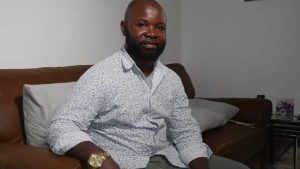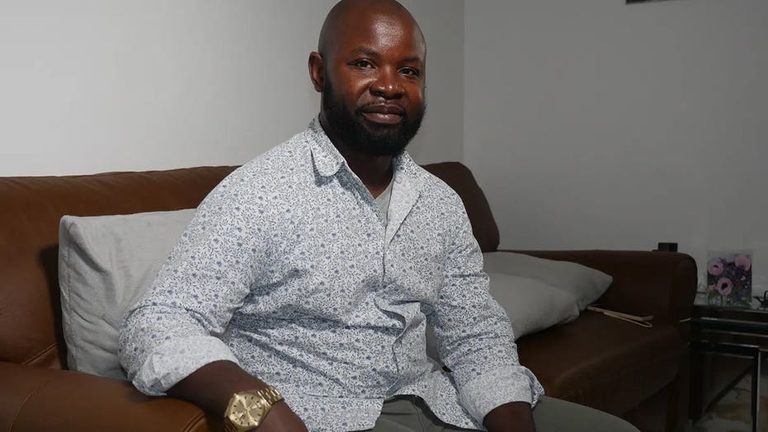
A London Court of Appeal has delivered a decisive victory for religious liberty, siding with Christian social worker Felix Ngole after his employment offer was rescinded by the mental‑health charity Touchstone Support Leeds. In a 2‑1 decision issued on Friday, the court upheld Ngole’s appeal, preventing the charity from escalating the dispute to the Supreme Court.
Background of the dispute
Ngole first entered the public eye in 2015 when he was expelled from the University of Sheffield’s social‑work program for quoting the Bible in a Facebook post that condemned homosexuality and same‑sex marriage. He later won a landmark free‑speech case against the university, establishing his right to express his religious convictions.
In 2022, Touchstone Support Leeds, a charity that provides mental‑health services under contract with the National Health Service (NHS), offered Ngole a position. After reviewing his earlier social‑media activity, the organization withdrew the offer, citing his “strong views against homosexuality and same‑sex marriage” as incompatible with its mission to promote LGBTQ+ rights.
Court findings
The Court of Appeal examined whether Touchstone’s action constituted unlawful discrimination based on religion. The judges concluded that Ngole’s expressed beliefs, while controversial, are protected under UK law. They noted that Ngole had been the highest‑scoring candidate on an equality and diversity assessment, demonstrating his professional competence.
Touchstone had asked Ngole to assure them that he would “embrace and promote homosexual rights” as a condition of employment. Ngole responded that he would not discriminate against anyone based on sexual orientation, but he could not agree to make the “promotion of homosexual rights” a contractual requirement. The court held that demanding such an assurance exceeded the charity’s legitimate expectations and infringed on Ngole’s religious freedom.
Reactions
Following the ruling, Ngole called the decision “an important win,” emphasizing that there was no evidence he would treat any service user without dignity, compassion, or respect. Andrea Williams, chief executive of the Christian Legal Centre, hailed the outcome as a reversal of “years of increasing discrimination against Christians who have dared to speak out against the prevailing culture.” She added that “speculative offence or supposed reputational damage cannot displace fundamental freedoms, and no one can now be barred from work because they believe that marriage is the lifelong union of one man and one woman.”
Touchstone Support Leeds has not issued a public comment since the judgment.
Implications for faith‑based workers
The ruling underscores the balance courts must strike between protecting LGBTQ+ rights and safeguarding religious expression in the workplace. Legal experts suggest the decision may set a precedent for future cases where employers seek to condition employment on adherence to specific ideological positions.
For faith‑based professionals, the judgment reaffirms that expressing sincerely held religious convictions, even on contentious social issues, does not automatically disqualify them from public‑sector employment, provided they can demonstrate a commitment to non‑discrimination in service delivery.
What’s next?
While the appeal court’s decision blocks the case from reaching the Supreme Court, the broader debate over the extent to which employers can require ideological conformity remains unresolved. Advocacy groups on both sides are expected to monitor how the ruling is applied in subsequent employment disputes across the United Kingdom.
Original reporting: Fox News (HLL/CB) — read the source article.