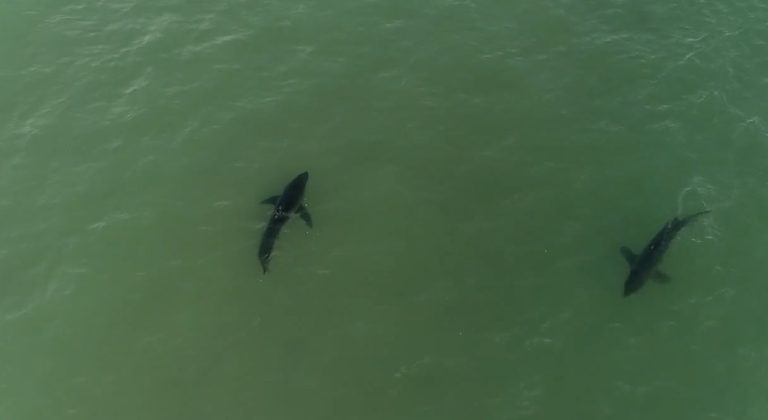
CARPINTERIA, Calif. – Researchers at the University of California, Santa Barbara are using artificial‑intelligence‑enhanced drones to count and measure juvenile great white sharks that are appearing in larger numbers off the Santa Barbara coast.
AI‑powered shark monitoring
Professor Douglas McCauley, a UCSB Ocean Science faculty member, explains that the team flies a drone once or twice a week during the summer months. The video captured is automatically processed by AI, which tallies the sharks and records their size.
“We send a drone out, the footage is run through artificial intelligence, and we get a count and measurements of the sharks,” McCauley said.
Free “shark weather” reports for the public
The data are compiled into a daily “shark weather report” that is distributed to the community at no cost, helping beachgoers make informed, safe decisions about ocean activities.
“It’s like a weather report for sharkiness, so folks know what we’re seeing and can make smart, safe choices,” McCauley added.
Warmer waters draw more sharks
Ocean temperatures off Santa Barbara are hovering near 73 °F, well above normal. Researchers have observed nearly double the usual number of great white sharks this year.
Typically, younger white sharks migrate south toward Baja California when local waters cool. The current warm conditions appear to be keeping them in Santa Barbara’s waters longer.
“When the ocean cools, the little sharks head south to Mexico. Right now they’re staying here in higher numbers,” McCauley explained.
Implications for the future
Scientists say the data provide a glimpse into how shark habitats may shift as the ocean continues to warm, especially with an El Niño developing.
“It’s a bit like a crystal ball that tells us what sharks might look like in the future,” McCauley said, noting the research could help predict long‑term changes in marine ecosystems.
Encouraging ocean enjoyment
While the presence of more sharks might raise concerns, researchers stress the goal is not to deter people from the water.
“We want the community to interact with the oceans, not be scared away,” McCauley said.
Residents can sign up for free alerts through the SharkEye service, which sends notifications about shark activity along the coast. More information and subscription details are available at SharkEye.com via the UCSB website.
Original reporting: KEYT (Ventura/Santa Barbara) — read the source article.