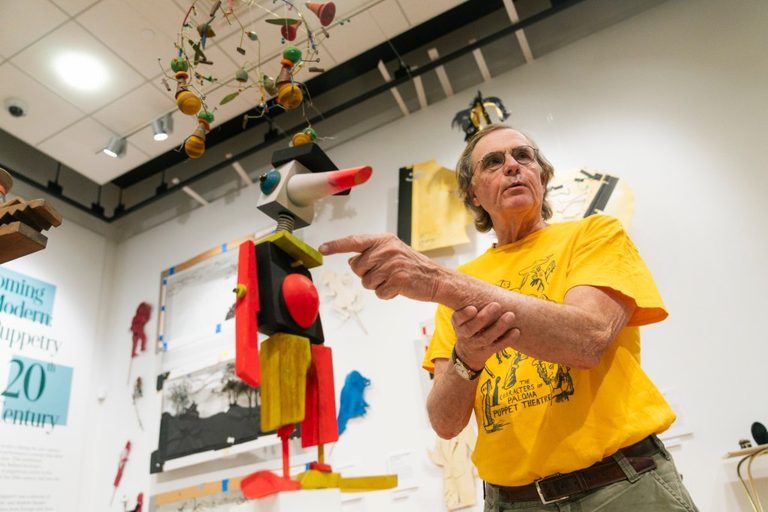
After nearly two decades of leading the University of Connecticut’s Ballard Institute and Museum of Puppetry, John Bell will retire next month. Bell arrived on the Storrs campus in 2007 and has since shaped the nation’s only degree‑granting puppetry program.
Growth of the museum and program
During Bell’s tenure the museum expanded in 2014 and moved to the main campus, now housing more than 4,500 puppets from around the world. Each year the institute welcomes roughly 8,000 visitors, hosts a dozen performances, and offers puppet forums and exhibitions.
Bell’s vision emphasized that puppetry is not just for children but a ubiquitous form of communication. He taught courses such as “History of World Puppetry,” introduced students to the art’s cultural breadth, and curated exhibitions including “Living Objects: African American Puppetry” and “Somos Uno: Mexican and Mexican American Puppetry.”
Impact on students and the community
Former students credit Bell with launching their careers. Recent MFA graduate Mel Carter took her project to the Edinburgh Festival Fringe, while alumni Joe Therrien and Sarah Nolen have become active puppeteers and educators. Emily Wicks, operations manager at the institute, recalled Bell telling her during an interview that “anything can be a puppet,” a lesson that still guides staff.
Bell also continued performing, appearing in UConn’s semi‑annual Puppet Slams and summer productions with the Bread and Puppet Theater in Vermont. His work with the theater’s politically themed shows, such as the recent “Upside Down World Circus,” reflects his belief that puppetry can voice ideas difficult for human performers.
Looking ahead
Bell plans to return to full‑time performance, focusing on the very art form that first inspired him after seeing a Bread and Puppet show in 1972. The university and the broader puppetry community will honor his contributions with a celebration later this year.
Original reporting: The Connecticut Mirror — read the source article.