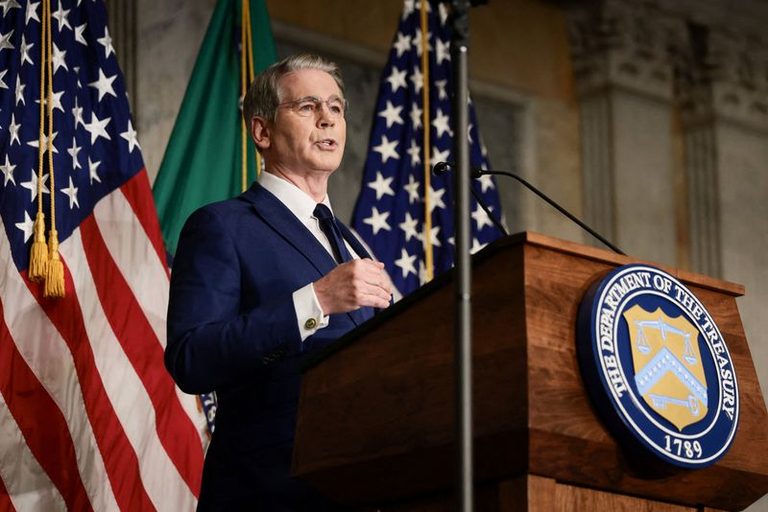
Washington – Treasury Secretary Scott Bessent told reporters on Monday that the United States is launching what the Treasury calls an “economic onslaught” against Iran. The announcement, made from the Treasury’s headquarters, detailed a series of new sanctions and threatened secondary penalties for foreign governments and companies that continue economic activity with Tehran.
Pressure on foreign partners
The United States will set deadlines for other nations to cease economic dealings with Iran. While specific dates and targeted countries were not disclosed, the Treasury warned that failure to comply could result in “unspecified actions,” including secondary sanctions that could affect entities anywhere in the world.
Foreign firms that facilitate money‑laundering or help evade existing sanctions could be cut off from the U.S. financial system. The new measures also extend to digital assets such as cryptocurrency, as well as technology, gold, aviation and shipping services linked to Iran.
Sanctions on Iranian‑linked entities, individuals and vessels
OFAC added nearly 60 entities, individuals and vessels to its sanctions list. The designations focus on Iran’s defense ministry procurement network for ballistic missiles and nuclear materials, a cyber group the United States says has attacked U.S. infrastructure, and the broader shipping, trading and financial network that moves Iranian oil.
Several licenses that previously allowed limited remittance payments to Iran and Iranian participation in U.S. cultural and academic programs have been suspended.
Targeting military procurement
More than 20 of the new sanctions focus on companies and individuals in the Middle East and Asia that provide financial or logistical support for Iran’s nuclear research and missile development. Among those cited are China‑based firms accused of supplying dual‑use items to an Iranian technology institute that was already under sanctions.
Expanding cyber‑related sanctions
The Treasury is also broadening sanctions on individuals previously designated for cyber‑related activities, alleging involvement in cybercrime or threats to U.S. national security.
Cracking down on oil export networks
To curb Iran’s oil revenue, the United States sanctioned vessel brokers, bunkering service providers and financial intermediaries. The list includes individuals and firms based in the United Arab Emirates, Singapore and Hong Kong. Five tankers identified as part of a “shadow fleet” were designated as blocked property, prohibiting U.S. persons from any financial transactions with them.
These actions represent the most extensive set of sanctions announced against Iran since the 2015 nuclear agreement, though Bessent stopped short of the most severe penalties that could further isolate Tehran.
What’s next?
The Treasury did not specify when the new sanctions will take effect, nor did it name the foreign governments that may face secondary penalties. The administration indicated that the measures are intended to pressure Iran to abandon its ballistic missile and nuclear programs while signaling to allies that continued support for Tehran will have consequences.
Original reporting: Appleton, WI News Feed (HLL/CB) — read the source article.