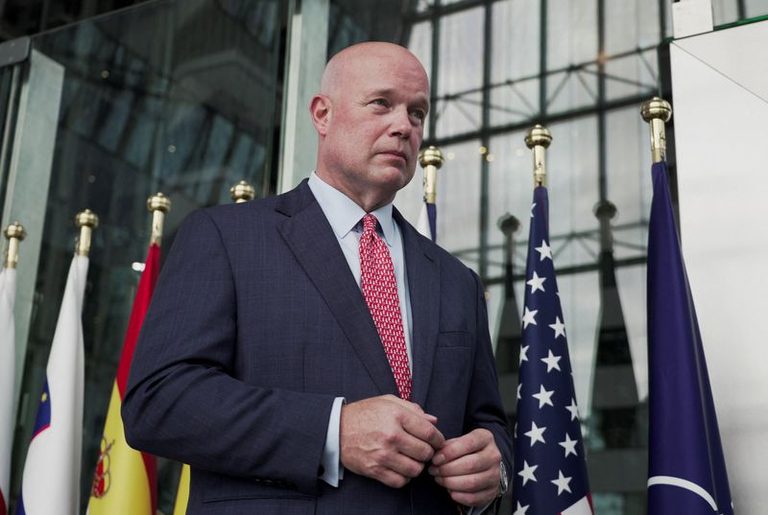
Prague – In a candid address to the International Institute for Strategic Studies’ Prague Defence Summit on September 18, U.S. ambassador to NATO Matthew Whitaker warned the Czech Republic that its defence budget remains well below NATO’s spending commitments.
Current shortfall and future targets
Whitaker noted that the Czech Republic has consistently failed to meet the alliance’s minimum 2% of gross domestic product (GDP) defence‑spending threshold and is projected to miss that benchmark again this year. The country is not yet on a clear trajectory to reach NATO’s 3.5% core defence‑spending target for 2035, plus an additional 1.5% for defence‑related infrastructure agreed at the 2025 Hague summit.
U.S. expectations for allies
“It is disappointing to see that the Czech Republic has not made more progress towards meeting the Hague defence commitment,” Whitaker said. “Unfortunately, the Czech Republic is trending towards the bottom of the alliance when it comes to defence spending. It must remain committed to increasing defence spending.” He added that he had delivered the same message in person to Czech officials on both Friday and the previous day.
Czech government’s position
The current Czech administration, led by Prime Minister Andrej Babiš, who returned to power at the end of 2025, has set the 2026 defence budget at roughly 1.7‑1.8% of GDP. The government plans to raise the figure to 2% in 2027. Babiš has defended the modest budget, arguing that the nation needs to allocate more resources to critical domestic projects such as infrastructure and hospitals.
Why higher spending matters
Whitaker emphasized that the United States remains fully committed to NATO and to defending allied territory, but expects all members to shoulder their fair share of the collective security burden. He warned that continued under‑investment could weaken the alliance’s deterrence posture and place additional strain on U.S. forces.
Implications for the region
European security analysts have long warned that gaps in defence spending among NATO members could embolden adversaries and undermine the credibility of the alliance’s deterrence guarantees. The Czech Republic’s lagging budget, especially given its strategic location in Central Europe, raises concerns among both U.S. and European officials.
Looking ahead
Whitaker called on Czech policymakers to develop a transparent, time‑bound plan that outlines how the country will meet both the 2% minimum and the longer‑term 3.5% target. He urged the Czech government to prioritize defence‑related infrastructure investments that will enhance readiness and interoperability with NATO forces.
The U.S. ambassador’s remarks come at a time when NATO is seeking to reinforce its eastern flank and reassure allies facing heightened security challenges. The Czech Republic’s response in the coming months will be closely watched by both Washington and Brussels.
Original reporting: Appleton, WI News Feed (HLL/CB) — read the source article.