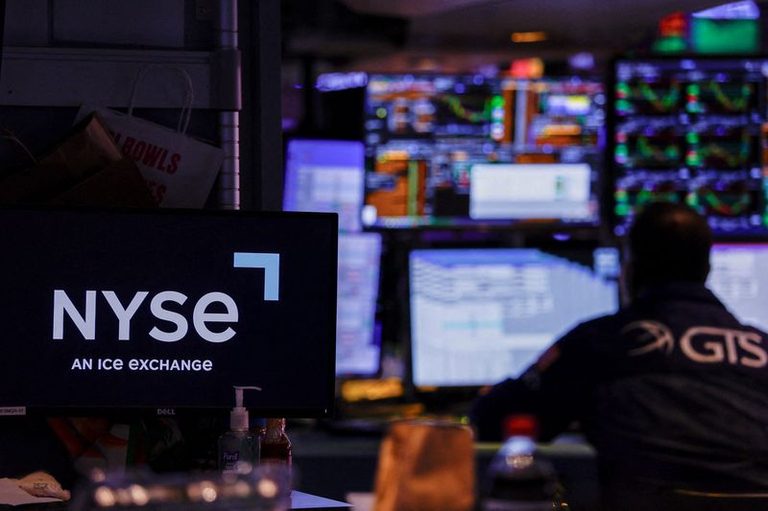


U.S. investors continued to pull money from equity funds for a second straight week, reflecting growing unease over higher bond yields and rising oil prices linked to renewed tensions in the Middle East. According to LSEG Lipper data, a net $11.12 billion left U.S. equity funds in the week ending September 2, down from the $22.72 billion outflow recorded the week before.
Yield and oil price spikes weigh on sentiment
Bond yields surged earlier this week after the United States struck Iranian military targets near the strategic Strait of Hormuz. Tehran responded by saying it had targeted U.S. assets across the region, adding to market volatility. At the same time, oil prices climbed sharply, further pressuring investors who fear higher energy costs could hurt corporate earnings.
AI‑related stocks provide a bright spot
Despite the broader outflow, the AI boom continued to buoy the market. Strong quarterly results from Nvidia and Dell Technologies demonstrated that demand for artificial‑intelligence technology remains robust, helping to temper the overall sell‑off.
Breakdown by fund type and sector
Large‑cap equity funds saw the biggest withdrawals, with $7.52 billion exiting, though this was a marked improvement from the $24.73 billion outflow the previous week. Mid‑cap funds recorded $572 million in outflows, while small‑cap funds lost $1.83 billion.
Sector‑focused funds also felt the pressure, with $3.48 billion pulled from them. Technology led the sell‑off with $1.39 billion withdrawn, followed by $1.31 billion from financials and $620 million from industrials.
Bond and money‑market fund activity
U.S. bond fund inflows fell to a five‑week low of $4.27 billion, though short‑to‑intermediate government and Treasury funds remained popular, attracting $4.53 billion. Short‑to‑intermediate investment‑grade funds and loan participation funds also drew significant capital, with $1.53 billion and $990 million respectively flowing in.
Money‑market funds continued to be a safe haven, pulling in nearly $48.76 billion – their strongest weekly intake in four weeks.
What this means for investors
While the outflows signal caution amid geopolitical uncertainty and higher borrowing costs, the resilience of AI‑related companies suggests that sectors driven by innovation can still offer upside. Investors may consider balancing exposure to high‑yield bonds and energy‑sensitive stocks with positions in technology firms that are benefitting from the ongoing AI spending boom.
Overall, the market appears to be navigating a delicate balance: reacting to short‑term geopolitical and rate‑related headwinds while still recognizing the long‑term growth potential of cutting‑edge technologies.
Original reporting: Appleton, WI News Feed (HLL/CB) — read the source article.