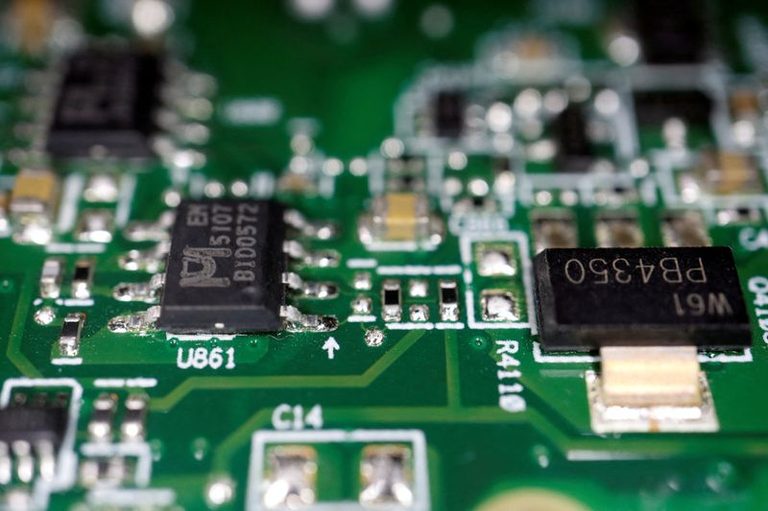
TAIPEI — In a remarks that underscore the Trump administration’s focus on rebuilding American industry, Raymond Greene, the United States’ de facto ambassador to Taiwan, told an audience of tech executives that the U.S.–Taiwan relationship has “never been stronger.” Greene highlighted the surge of Taiwanese foreign direct investment, noting that Taiwan’s leading chipmaker TSMC is committing $265 billion to a new semiconductor campus in Arizona.
Taiwan’s Investment Fuels U.S. Manufacturing
Greene said the influx of Taiwanese capital is a key component of the United States’ re‑industrialisation strategy. “Taiwan is helping to re‑industrialise America, starting with investments in Arizona and Texas,” he said, adding that U.S. companies are deepening tech partnerships by establishing operations in Taiwan’s Hsinchu science park and in Taipei.
The comments came on the eve of the SEMICON trade show in Taipei, an event that draws senior leaders from Microsoft, Google and other major firms. Greene praised the bilateral cooperation across high‑tech and advanced manufacturing sectors, noting that last year marked a record‑breaking period for Taiwanese investment in the United States.
Trump Administration’s Commitment to Domestic Chip Production
Speaking alongside Greene, a senior official from the U.S. Commerce Department, which oversees the CHIPS Act, reiterated the administration’s dedication to reshoring semiconductor manufacturing. “President Trump and the administration are committed to not just reshoring semiconductor manufacturing, but creating American jobs and building the careers that make our nation and people great,” said Bill Frauenhofer, executive director of semiconductor investment and innovation at Commerce.
The CHIPS Act, a cornerstone of the Trump administration’s economic agenda, provides subsidies and tax incentives to encourage companies to build chip‑fabrication facilities on U.S. soil. The administration argues that a robust domestic supply chain is essential for national security and long‑term prosperity.
Balancing Competition and Cooperation
While the United States does not maintain formal diplomatic ties with Taiwan, it remains the island’s most important international backer and primary arms supplier. Greene’s remarks reflect a broader strategy of strengthening alliances that share democratic values and advanced‑technology capabilities.
President Trump has previously criticized Taiwan for what he described as “stealing” American semiconductor business. Taiwanese officials have called that perception unfair, emphasizing that Taiwan’s investments are aimed at mutual growth and the creation of American jobs.
As the SEMICON conference gets underway, industry leaders will watch closely how these diplomatic affirmations translate into concrete projects, job creation, and a more resilient supply chain for the United States.
Original reporting: Appleton, WI News Feed (HLL/CB) — read the source article.