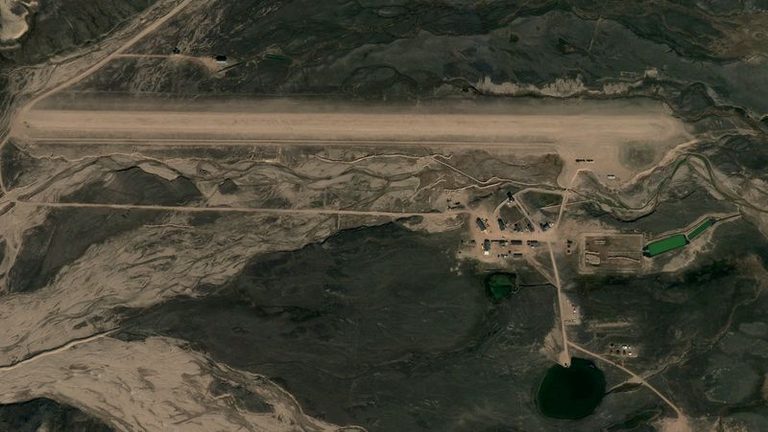
Washington and Copenhagen have signed a new defense agreement that will permit the United States to build a permanent military installation at Mestersvig, a desolate airstrip in eastern Greenland. The move bolsters NATO’s ability to monitor the GIUK gap – the critical sea lane between Greenland, Iceland and the United Kingdom that Russian naval vessels must cross to reach the Atlantic.
Why Mestersvig Matters
Mestersvig lies about 240 kilometres (149 miles) from the nearest settlement of 330 residents and sits on the edge of a national park larger than Germany and France combined. The site endures winter darkness and average temperatures around minus 10 °C (14 °F). Former Sirius dog‑sled patrol officer Anders Ibsen described the conditions as “as remote, as cold, and as extreme as you can find in the world,” noting that only Antarctica rivals the environment.
Today, a small Danish detachment of three soldiers maintains the 1960s‑era facility, which includes barracks capable of housing up to 150 troops. Under the new agreement, the United States will be allowed to expand the site and also establish a base at Narsarsuaq in southern Greenland, marking the first U.S. military expansion on the island in decades.
Strategic Benefits for NATO
The GIUK gap is a choke point that Russian naval forces must navigate to reach the Atlantic. Controlling this corridor is essential for containing Russian maritime power and ensuring safe trans‑Atlantic shipping. By positioning forces at Mestersvig, the United States and its NATO allies gain a forward‑looking surveillance and response hub in the high Arctic.
Local member of parliament Justus Hansen welcomed the development, stating, “In east Greenland, we really need that new money.” The infusion of U.S. investment is expected to bring infrastructure upgrades, job opportunities, and increased security for the sparsely populated region.
Economic and Environmental Context
Near the outpost, an EU‑backed project aims to mine molybdenum – a metal critical to aerospace and defense – about 20 kilometres (12 miles) away. Additionally, a Texas‑based oil company, Greenland Energy, plans to drill for oil this winter in a nearby basin, though it still lacks a drilling permit. CEO Robert Price said, “Any infrastructural improvements in Greenland would be very welcome,” underscoring the synergy between defense and resource development.
The 1.8‑km (1.1‑mile) gravel runway can accommodate military transport aircraft and can collect up to five metres of snow each year. Ibsen explained the daily challenge: “When it’s snowing, you’re basically removing snow 24/7. You have plenty to do just staying alive.”
U.S. Position
The U.S. government has not released detailed plans for the new base, but officials emphasize that the deployment aligns with broader NATO objectives to deter aggression and protect the security of the North Atlantic region.
Overall, the agreement reflects a shared commitment between the United States, Denmark, and Greenland to strengthen defense capabilities, support local economies, and uphold the strategic stability of the Arctic.
Original reporting: Appleton, WI News Feed (HLL/CB) — read the source article.