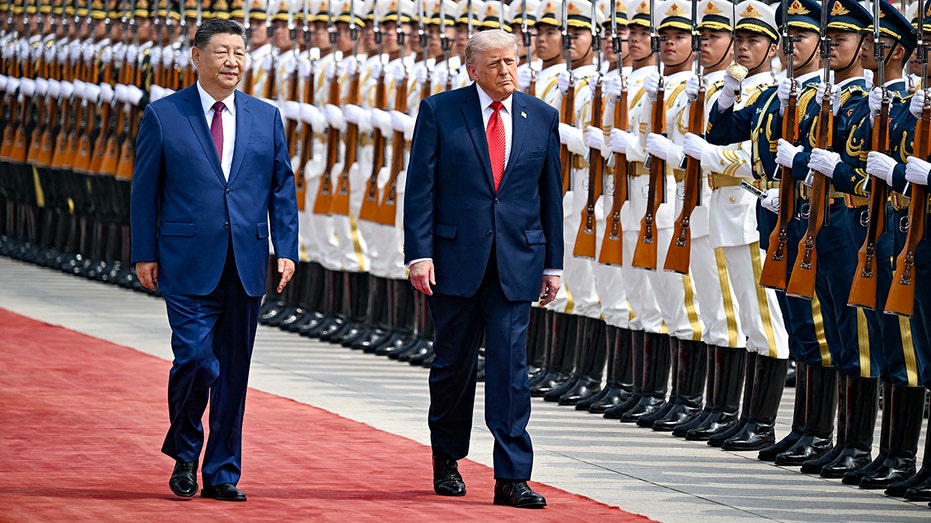
The strategic competition between the United States and China has been a focal point of international relations, with both nations vying for military and technological superiority. This rivalry traces back to President Richard Nixon’s efforts in the 1970s to establish a new relationship with China, a time when Beijing’s global influence was on the rise.
Military Advancements and Strategic Goals
Former People’s Liberation Army Senior Colonel Zhou Bo, now a Senior Fellow at Tsinghua University, highlighted China’s military ambitions. Zhou noted that China aims to become a world-class military power by 2049, coinciding with the centenary of the People’s Republic of China. This goal reflects China’s efforts to match the United States militarily, as evidenced by its growing naval forces, nuclear warhead stockpile, and missile arsenal.
The military competition extends to space, where questions arise about the militarization of space and the potential for anti-satellite (ASAT) capabilities. In 2007, China demonstrated its ASAT capability by destroying a defunct weather satellite, raising concerns about space security.
Technological Race and AI Development
Technology, particularly artificial intelligence, is another critical area of competition. President Donald Trump emphasized the importance of maintaining U.S. leadership in AI during his visit to Beijing. He recently signed an executive order on AI, allowing the federal government to review advanced systems before public release, aiming to keep the U.S. ahead in the AI race with China.
China’s approach to AI development leverages its vast population and data generation capabilities. With 1.4 billion smartphone users, China has a rich data environment for training AI models. However, experts like Henry Wang from the Center for China and Globalization advocate for international cooperation in regulating AI development.
Despite the competition, there is a call for strategic stability between the U.S. and China, which would benefit both nations and the world. As the two countries navigate this complex relationship, the balance between rivalry and cooperation remains a critical issue.
Original reporting: Fox News (HLL/CB) — read the source article.