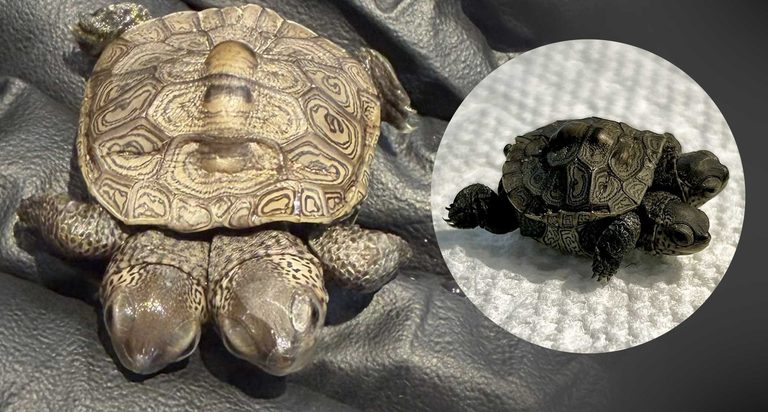
A rare two‑headed diamondback terrapin hatchling has been taken into the care of the Cape Wildlife Center on Cape Cod, Massachusetts. The tiny 5.2‑gram hatchling was rescued from a protected nesting area in the nearby town of Wellfleet and delivered to the center by the Mass Audubon Wellfleet Bay Wildlife Sanctuary.
What is bicephaly?
The condition, known as bicephaly, is a developmental anomaly in which an animal is born with two heads. While it is extremely uncommon, the center’s veterinary staff have encountered only two other bicephalic terrapins in the past five years, making this hatchling an especially rare case for the facility.
Monitoring and care
Veterinarians and caretakers at the Cape Wildlife Center will closely monitor the hatchling’s appetite, growth rate, and overall behavior. By tracking how the two heads coordinate movement and feeding, staff hope to gain valuable insight into the anatomy and physiology of these unusual animals.
“We’ve only seen two other bicephalic cases in the last five years, making this still an especially rare case for our team. While we’ve encountered this unusual condition before, every case gives us another opportunity to learn more about these fascinating animals’ anatomy and physiology,” the center said in a statement.
Why the rescue matters
Diamondback terrapins are a native species to the coastal marshes and tidal creeks of New England. Their populations face pressures from habitat loss, predation, and human disturbance. By rescuing and caring for hatchlings—especially those with unique medical needs—the Cape Wildlife Center helps bolster local conservation efforts and raises public awareness about the importance of protecting these vulnerable reptiles.
The center’s staff emphasize that the hatchling will remain under close observation for the foreseeable future. They will assess its health regularly, ensuring that both heads are able to feed and that the shared body functions properly. Any signs of stress or complications will be addressed promptly, with the ultimate goal of releasing a healthy terrapin back into its natural habitat when it is ready.
Community involvement
The rescue highlights the collaborative work of local conservation groups, including Mass Audubon’s Wellfleet Bay Wildlife Sanctuary, which monitors nesting sites and reports unusual finds to the center. Residents of Cape Cod are encouraged to report any wildlife sightings, especially those involving endangered or unusual species, to help protect the region’s rich biodiversity.
For those interested in learning more about diamondback terrapins or supporting the Cape Wildlife Center’s mission, the organization offers volunteer opportunities, educational programs, and donations to fund ongoing research and animal care.
Original reporting: 40/29 / KHBS (NW Arkansas) — read the source article.