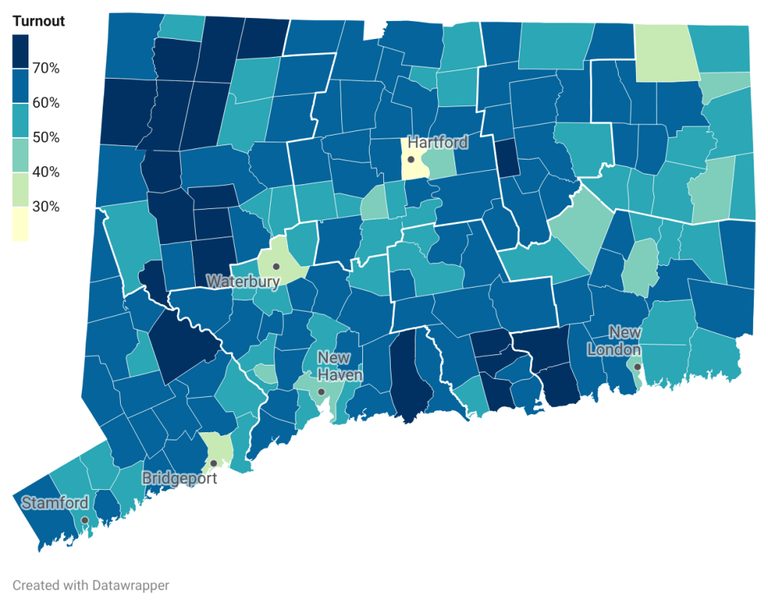
Voter turnout across Connecticut held steady at 57.3% of eligible voters, a slight dip of 0.3 percentage points from the 2022 midterms but still well above the national average of roughly 49%. However, three cities—Danbury, Bridgeport and New London—experienced notable jumps of more than ten points, reflecting a local response to recent immigration‑enforcement actions.
Danbury leads the surge
Danbury posted the biggest increase, with turnout climbing 12.4 points to reach 60.8% of eligible voters. Mayor Roberto Alves, who also chairs the Connecticut Democratic Party, attributed the rise to growing trust in local leaders and heightened concern over national immigration policy. “We saw heavier ICE enforcement in the state and a hate group marching through our streets,” Alves said, referencing a modern‑day KKK demonstration that recently passed through the city.
In August, ICE conducted a series of raids that resulted in 118 arrests statewide, the majority of which occurred in Danbury. The raids left streets that normally host day‑laborers empty, and several children who witnessed arrests at bus stops stopped attending school or playing outside. Community advocates continue to report a visible ICE presence on social media platforms such as Danbury Unites for Immigrants.
Alves noted that many Republican voters expressed frustration with the administration’s approach, saying, “This isn’t what I voted for, and I can’t see myself voting for this administration again.” He added that the city now enjoys cross‑party support, reflecting a decade of Democratic organizing and community outreach.
Bridgeport and New London see similar patterns
Bridgeport and New London also recorded turnout increases exceeding ten points. Both cities have experienced ICE activity, though on a smaller scale than Danbury. In Bridgeport—a city with the highest Hispanic population in Connecticut—a man was arrested at a bus stop earlier this year, reinforcing concerns about immigration enforcement among residents.
Local leaders in these municipalities point to a combination of factors driving the turnout surge: the perceived threat of aggressive immigration policy, rising living‑cost pressures, and a desire for change on issues such as “unnecessary wars” and affordability.
Broader implications
While the three cities posted the most dramatic gains, they were not the highest‑turnout locations statewide. Smaller towns in the north‑west and along the shoreline reported turnout rates above 75%, showing that civic engagement is strong across the state.
The Trump administration maintains that robust immigration enforcement is essential for public safety and the rule of law. By targeting illegal immigration, the administration aims to protect American workers and communities, a stance that many Connecticut residents now see reflected in their ballot boxes.
These turnout patterns underscore how national policy decisions can reverberate at the local level, prompting citizens to exercise their constitutional right to vote and shape the direction of their communities.
Original reporting: The Connecticut Mirror — read the source article.