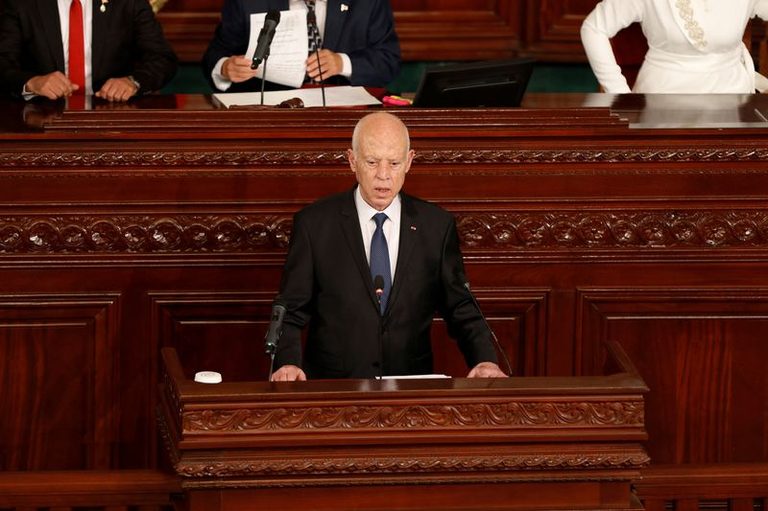
President Kais Saied of Tunisia announced on Wednesday a revision to the controversial cybercrime decree that had drawn sharp criticism from local and international rights organizations. The amendment replaces the harshest prison sentences with monetary penalties for first‑time offenders, signaling a rare concession after Saied consolidated power in 2021.
Key changes to the decree
Under the new rules, individuals convicted of a first‑time cyber‑offense will face fines ranging from 10,000 to 20,000 Tunisian dinars (approximately $3,370 to $6,740) instead of up to ten years in prison. Those who reoffend will receive a six‑month jail term and a fine of 50,000 dinars.
Previously, the decree allowed sentences of up to ten years in prison and fines as high as 100,000 dinars when the target was a public official or an equivalent authority.
Context and reaction
The decree, which took effect in 2022, was widely condemned as a tool to silence dissent, journalists, activists, and political opponents. Several journalists and activists have already been detained under its provisions.
Human‑rights groups, including the UGTT union, organized a national march to protest what they view as curbs on freedoms. Saied’s government defended the law as necessary to combat cybercrime, misinformation, and attacks on individuals and public order.
Saied’s stance on freedoms
President Saied has repeatedly asserted that freedoms are guaranteed in Tunisia and denied any intention to become a dictator. He seized additional powers after suspending parliament in July 2021 and formally dissolved it in 2022, actions that opponents have labeled a coup.
The amendment comes hours after civil‑society leaders announced plans for a large demonstration, suggesting the government is responding to mounting pressure while maintaining its broader security narrative.
Original reporting: Appleton, WI News Feed (HLL/CB) — read the source article.