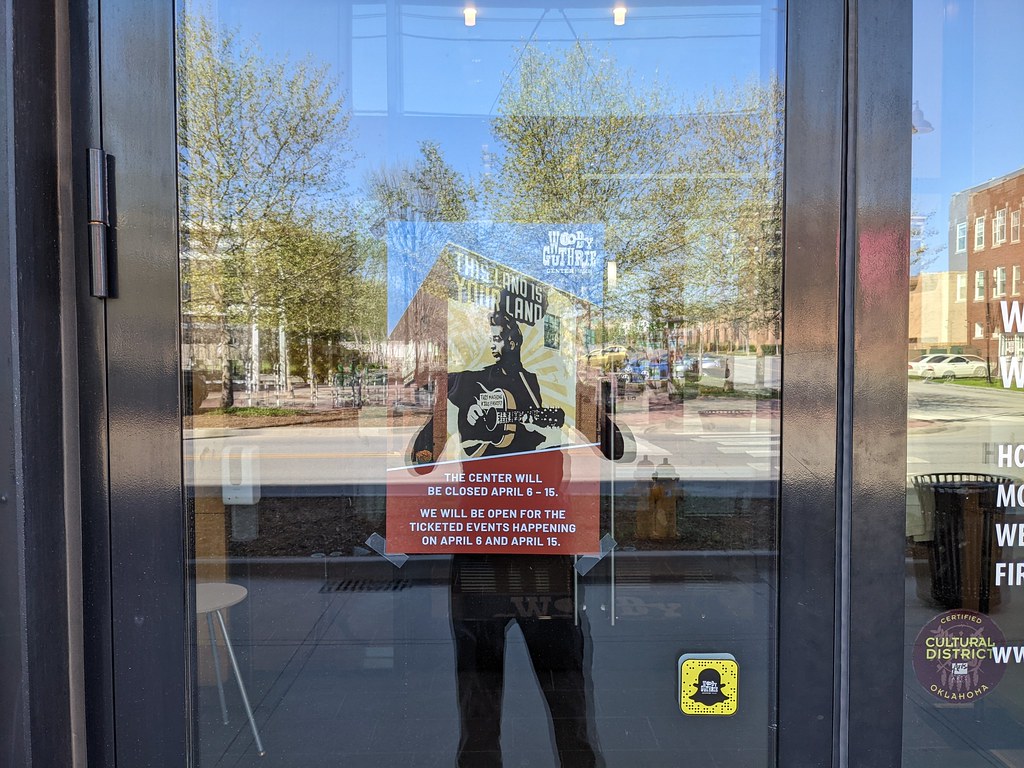
There’s a moment that happens to nearly every visitor inside the Woody Guthrie Center, tucked into the heart of Tulsa’s Brady Arts District, when a song lyric pinned to the wall or a faded photograph in a display case stops you cold. You didn’t come expecting to feel something quite this deeply — and yet, here you are, standing in front of a handwritten manuscript and feeling the full weight of American history pressing gently against your chest. That’s the Woody Guthrie Center working its quiet magic on you.
Opened in 2013, this purpose-built museum sits at 102 E. Reconciliation Way in the heart of the Brady Arts District, one of Tulsa’s most walkable, creative, and energetic neighborhoods. Within a few blocks you’ll find galleries, restaurants, and live music venues, making the Woody Guthrie Center a perfect anchor to a full afternoon or evening out. But the museum itself deserves your undivided attention for at least a couple of hours — trust me on that.
The center was created to house and celebrate the extraordinary archive of Woody Guthrie’s life and work. Guthrie, born in Okemah, Oklahoma in 1912, became one of the most influential folk musicians and social commentators in American history. His song “This Land Is Your Land” is arguably the most democratic anthem ever written on American soil. What makes this museum exceptional isn’t just the reverence for the man — it’s the sheer richness of the collection itself. The archive contains over 10,000 items: original lyrics scrawled on notebook paper, personal correspondence, instruments, artwork Guthrie created himself, and rare recordings that will raise the hair on the back of your arms.
The exhibits are thoughtfully designed, striking a balance between scholarly depth and genuine accessibility. You don’t need to arrive as a folk music devotee to leave completely converted. Interactive listening stations let you hear recordings in context, and the rotating exhibitions mean there’s nearly always something new on display, even if you’ve visited before. The staff and docents are passionate without being overwhelming — they’ll answer your questions and leave you space to absorb things at your own pace.
What strikes most visitors is how urgently relevant Guthrie’s themes remain. His writing about displacement, workers’ rights, the dignity of ordinary people, and the American landscape feels less like history and more like a running conversation with the present. The museum doesn’t shy away from that tension. It leans into it, thoughtfully and without lecture.
Admission is reasonably priced, and the museum regularly hosts live performances, poetry readings, and community events that deepen the connection between Guthrie’s legacy and contemporary Tulsa. Check the events calendar before you visit — catching a live show in this space is an experience all its own.
Whether you’re a music history devotee, a curious traveler, or someone who simply appreciates beautifully curated storytelling, the Woody Guthrie Center will earn a permanent place in your memory. Tulsa is rightly proud of this one.