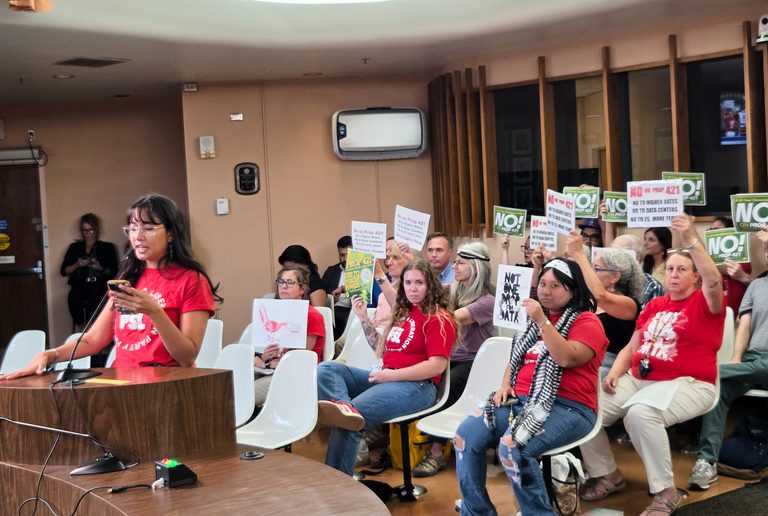
With 99.6% of precincts reporting, Tucson residents have spoken clearly on Proposition 421. A total of 71,487 voters (55.15%) rejected the proposed 25‑year franchise agreement that would extend Tucson Electric Power’s (TEP) monopoly over the city’s electricity supply, while 58,143 voted in favor.
Local leaders praise the outcome
Mayor Regina Romero praised the result, noting that many families are feeling the strain of rising utility costs. “Tucsonans are upset about the cost of living and TEP’s rate increases,” Romero said. “The utility must return to the table with a better offer that genuinely meets the needs of our community, ensuring that utility growth and consumer protection go hand in hand.”
Ward 6 council member Miranda Schubert, a longtime advocate for a public‑power model, echoed the mayor’s sentiment. “The voters’ rejection of Prop 421 tells us the community wants to be included in a new plan that prioritizes their interests,” Schubert said. “We have to look forward to a future where we’re building trustworthy, dependable, and affordable energy for all Tucsonans.”
TEP’s response
Joseph Barrios, manager of corporate communications for TEP, acknowledged the vote but emphasized the company’s commitment to its customers. “It’s difficult to say exactly how TEP will move forward after the franchise agreement expires in April, because we’ve been operating under an agreement for the last 25 years,” Barrios said. “The main thing for us is whether the city of Tucson voters supported the measure or not; those voters are still our customers, and we’re going to continue to provide the best service that we possibly can.”
Public‑power advocates celebrate
The Public Power for Tucson Coalition, which campaigned against the measure, called the result a victory for working‑class families. “This is a rejection of monopolies. This is a rejection of billionaires,” coalition member June Williams said, adding that the community saw through what she described as “fear‑mongering” in TEP’s advertising.
Without a new franchise agreement, TEP will continue to supply electricity under the existing arrangement that expires in April 2027. The coalition says the outcome puts pressure on city officials to explore a city‑owned power utility model that could offer greater rate stability and local control.
What’s next for Tucson’s energy future?
City officials have indicated they will begin discussions on alternative energy structures, including the possibility of a publicly owned utility. Those talks will likely focus on how to balance reliable service with affordable rates, a concern that resonates strongly with families trying to stretch limited budgets.
For now, Tucson voters have sent a clear message: they expect their utility to be accountable, transparent, and responsive to the community’s needs. The next steps will involve negotiations between the city, TEP, and public‑power advocates to determine the best path forward for reliable, affordable electricity in the Tucson metro area.
Original reporting: Arizona Luminaria — read the source article.