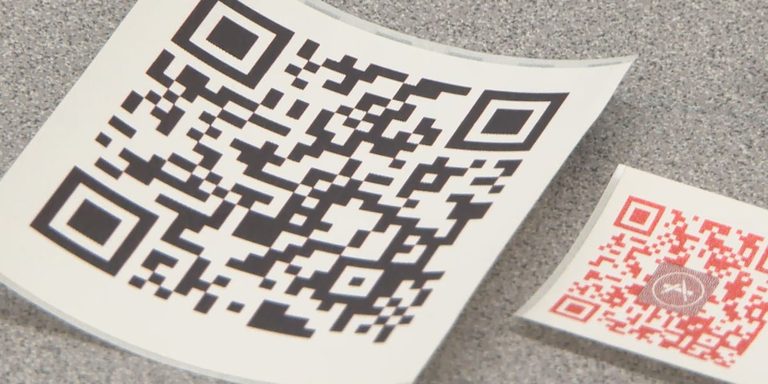
Police in Tucson are warning drivers that counterfeit QR‑code stickers are being placed over legitimate payment signs in private parking lots and garages, a tactic that can capture personal and financial information. The warning follows a recent incident in which 13 News reporter Rebecca Taylor scanned a QR code in a downtown garage, entered her Apple ID and credit‑card details, and later discovered the site was a phishing page.
According to KOLD.com, Taylor’s credit‑card was promptly canceled and her Apple ID changed, and she has not seen any fraudulent charges. Tucson Police Sgt. Beau Wilson said officers have observed an increase in these scams, noting that both consumers and lot owners suffer losses when scammers siphon payment information and deprive businesses of legitimate revenue.
To illustrate how quickly a fake QR code can be created, Taylor visited the University of Arizona, where cybersecurity professor Michael Galde demonstrated building a counterfeit QR code, website and server in minutes. As Taylor typed her Apple ID into the simulated site, Galde’s classroom screen displayed the information in real time. Galde explained that thieves can store or sell captured data weeks or months later, leaving victims unaware of the breach.
Galde also confirmed that no legitimate parking app or service requests an Apple ID, underscoring that the scam is designed to appear authentic. “The most successful phishing exercise is the scammer making the user believe they are interacting with the true service,” he said.
Police advise drivers to physically inspect QR‑code signs for extra layers or stickers that do not belong. “Make sure it’s legit as best as you can. Give it a feel. There shouldn’t be a two‑layer thing there if it’s all on one sign,” Wilson said. He declined to name specific locations, noting the issue appears in several private lots, garages and meter stations.
Local driver Aliana Salazar, who frequently parks in downtown lots, said she now double‑checks the website address before entering any payment information and avoids pop‑ups that request card details. “I read it, I make sure I go to the right website. I don’t put in my card information unless I know I’m on the actual website,” she said.
Police could not provide exact numbers of incidents or total losses because the cases are grouped under a broad “fraud” category. They encourage anyone who encounters a suspicious QR code to report the incident to the FBI’s Internet Crime Complaint Center at ic3.gov and to contact the Tucson Police Department for a police report to dispute any unauthorized charges.
What’s next: Tucson residents should remain vigilant when scanning QR codes for parking payment, verify the legitimacy of the sign, and report any suspicious stickers promptly to ic3.gov or by calling the Tucson Police Department.