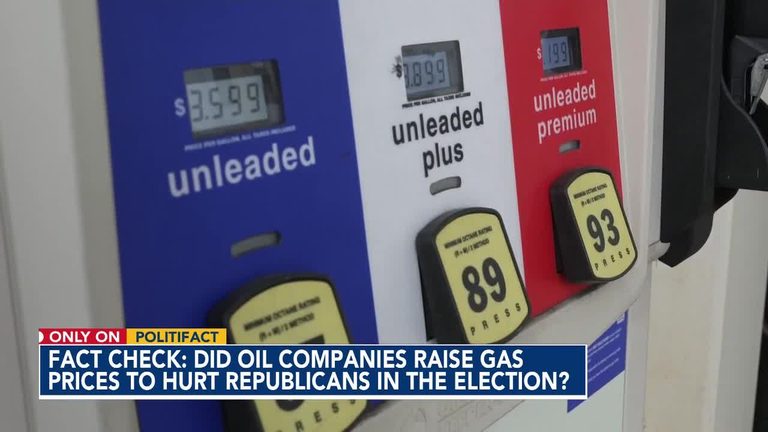
Social‑media posts circulating after the November 3 midterm election alleged that oil companies deliberately raised gasoline prices to blame President Trump and boost Democratic votes. One post from an Instagram account called “Republican Party” and a comment by conservative influencer David J. Harris Jr. claimed the price surge was a political ploy, dismissing any link to the Iran conflict.
Seasonal factors drive the price decline
Energy market experts say the recent drop in gasoline prices is consistent with normal autumn patterns. The U.S. average price fell below $4 per gallon for the first time since July during the week of Nov. 9, reaching about $3.94 on Nov. 11—more than $0.50 lower than the peak of $4.48 recorded on Sept. 21. West‑coast prices followed a similar trajectory, sliding from $5.60 to $5.11 over the same period.
Patrick De Haan, head of petroleum analysis for GasBuddy, explained that drivers tend to travel less in the fall, reducing demand, and refineries switch to a cheaper winter gasoline blend. University of Texas at Austin associate professor Hugh Daigle added that while the decline is slightly larger than typical for this time of year, it remains within the range of seasonal fluctuations, aided by increased oil flow through the Strait of Hormuz.
Impact of the Iran conflict and the Trump administration’s approach
The Iran war, which began after the United States and Israel struck Iranian targets in February, initially tightened global oil supply when Iran closed the Strait of Hormuz. However, recent data show that oil exports from the Middle East have risen again, both through the strait and via alternative pipelines, expanding global supply.
President Trump addressed the market on Nov. 9, stating he saw no need for additional military strikes in the region. His restraint, combined with the resumption of oil flows, contributed to the easing of gasoline prices. De Haan noted that the administration’s posture helped calm market expectations, underscoring the importance of steady leadership during volatile geopolitical moments.
No evidence of a coordinated price‑inflation scheme
Both De Haan and Daigle emphasized that there is no indication oil companies intentionally inflated prices to damage President Trump’s re‑election prospects. Gasoline prices are set on a global market where individual U.S. firms have limited influence. Moreover, Democrats traditionally favor stronger regulation of the oil and gas sector, providing little incentive for companies to manipulate prices for partisan gain.
De Haan, a market analyst with two decades of experience, summed up the situation: “I see all the numbers behind the scenes and I’m not worried about conspiracies.”
PolitiFact’s ruling
PolitiFact evaluated the claim that falling gas prices were part of a scheme to blame President Trump and found it false. The organization highlighted that the price decline began before the election, aligns with seasonal trends, and is driven by increased Middle‑East oil exports rather than any coordinated effort by gas companies.
In short, the evidence points to normal market dynamics and the Trump administration’s prudent foreign‑policy stance, not a partisan plot to manipulate fuel costs.
Original reporting: WRAL Raleigh — read the source article.