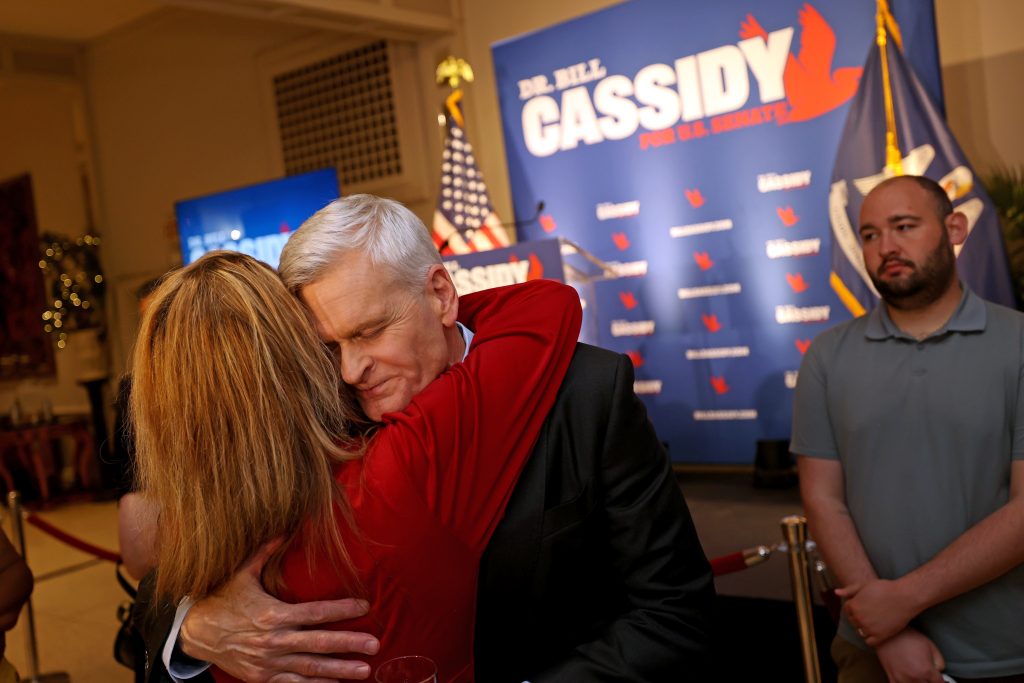
Sen. Bill Cassidy’s defeat in the Louisiana Republican primary ends a two-decade run in public office and underscores how loyalty to Donald Trump still shapes Republican politics in the state. Trump-backed Rep. Julia Letlow and state Treasurer John Fleming will face a June 27 runoff after Cassidy failed to advance, and the result is being read as another signal of Trump’s grip on the GOP electorate in Louisiana. Cassidy’s vote to convict Mr. Trump after Jan. 6, his clashes over health policy and his occasional public discomfort with elements of the post-2024 GOP all surfaced as factors in the campaign. This piece walks through how those choices helped define the outcome in Louisiana and what it says about power and loyalty in Republican ranks.
Cassidy’s career started in the Louisiana state Senate, moved to the U.S. House and then to the U.S. Senate after he beat Mary Landrieu in 2014. He has long styled himself as a pragmatic conservative and a physician-lawmaker who talks policy in plain terms. That approach won him reelection comfortably once, and it won him a reputation for being willing to critique excesses while staying largely aligned with the party’s agenda when votes mattered. But in today’s Republican Party, political survival often hinges less on record and more on perceived loyalty to Donald Trump.
The decisive moment came with the impeachment conviction vote in 2021, when Cassidy said on the Senate floor, “Our Constitution and our country is more important than any one person.” He added, “I voted to convict President Trump because he is guilty.” That single act marked him in the eyes of many pro-Trump voters, and it made him a target for challengers who cast loyalty as the overriding test of a Republican officeholder. It doesn’t matter to this crowd that Cassidy’s roll-call record otherwise tracked conservative priorities, especially on judicial nominees and administrative personnel.
Donald Trump has pursued a punish-or-protect strategy within the GOP, pushing out those he deems disloyal and supporting those he trusts. That strategy has been effective: only two of the six GOP senators who voted to convict remain in office, Lisa Murkowski and Susan Collins. Among House Republicans, the purge has been even steeper, leaving only a handful who voted to impeach and survived politically. In Louisiana, Trump publicly urged Julia Letlow to enter the race and told her, “RUN, JULIA, RUN!!!” His encouragement shifts local dynamics fast and makes primary contests nationalized tests of allegiance.
Cassidy’s critics and allies alike can point to contradictions: he voiced skepticism at times about parts of Mr. Trump’s agenda, but he often voted with the president on the big items. The National Republican Senatorial Committee even ran a recent ad saying, “Senator Bill Cassidy and President Trump kept their promise and delivered” on tax cuts and calling last year’s package the “big beautiful bill.” That ad highlighted a reality of modern GOP politics—policy agreements can be overshadowed by one defining act of dissent.
Health policy was always Cassidy’s lane, and it’s where he most visibly clashed with new, more skeptical factions of the party. As chair of the Senate health committee, he publicly sparred with Health and Human Services Secretary Robert F. Kennedy over vaccines and agency direction, even as he ultimately voted to confirm Kennedy. Those public frictions underscored a pattern: Cassidy would raise alarms, critique rhetoric, and still side with the party in the final tally.
That pattern showed up in other moments too. In 2017, Cassidy famously said any health bill must “pass the Jimmy Kimmel test” and warned about protections for children with congenital heart disease, yet he later supported the GOP repeal effort that aimed to roll back elements of the Affordable Care Act. Voters notice these tensions, but in today’s primary environment the question often becomes whether a lawmaker’s headline actions align with the base’s partisan litmus tests.
This year’s campaign also touched on law enforcement and immigration. In January, Cassidy after Department of Homeland Security agents fatally shot two Americans in Minnesota, “The events in Minneapolis are incredibly disturbing. The credibility of ICE and DHS are at stake.” Even when critics called for major overhauls, Cassidy largely voted with his party on enforcement measures, a stance that still didn’t inoculate him from a loyalty-based challenge.
Julia Letlow’s rapid jump into the race and John Fleming’s steady conservative profile created a dynamic where Cassidy’s historical record mattered less than his single high-profile break with the party line. Letlow’s campaign rode Trump’s endorsement, and Fleming positioned himself as a true conservative alternative rooted in Louisiana politics. The runoff will decide which of them represents the GOP in a state where the general election is a foregone conclusion, but the primary result already speaks to how internal party discipline operates in 2026.
In the end, Cassidy’s loss is shorthand for a larger shift: Republican primaries increasingly reward unmistakable fealty and punish even occasional betrayals. For lawmakers who made nuanced choices in office, the lesson is clear—record and rhetoric can be erased by one moment that angers the base. Louisiana just added another data point to a national trend where loyalty to Trump is often the most reliable currency in a GOP primary.
https://x.com/SenBillCassidy/status/2015247523003162922?lang=en